Ejaculating sooner than you would like can be frustrating, especially when you feel like you have very little control over when it happens. Many men worry that they are not lasting “long enough” or that their partner will be disappointed.
Thank you for reading this post, don't forget to subscribe!But ejaculation control is not really about reaching a particular number of minutes.
Sexual experiences vary widely, and there is no stopwatch that defines whether sex was satisfying. What matters more is whether you feel comfortable, can recognize your level of arousal, and have enough control to respond when ejaculation starts getting close.
Occasional early ejaculation is also common. It does not automatically mean you have premature ejaculation or that something is wrong with your sexual health.
The good news is that ejaculation control can sometimes improve with practice. Learning to notice rising arousal, reducing unnecessary tension, using pauses, and becoming more comfortable communicating with your partner can all help.
From Dr. Neha’s perspective, the goal is not to fight your body’s natural response. It is to understand it better so you can feel more confident and in control.
What Does Ejaculation Control Actually Mean?

Ejaculation control means being able to recognize when your arousal is building and respond before ejaculation reaches the point where it feels unavoidable.
This sounds simple, but it requires awareness. Your body gives you physical signals as arousal increases changes in breathing, muscle tension, sensation, and the feeling that ejaculation is getting closer.
Learning to notice these signals gives you an opportunity to slow down or pause instead of waiting until the last possible moment.
There is also no universal “normal” duration for sex. Some couples are satisfied with shorter encounters, while others prefer longer periods of sexual activity.
Occasional early ejaculation is different from premature ejaculation (PE). PE is generally considered in terms of persistent difficulty controlling ejaculation, how consistently it occurs, and whether it causes significant personal or relationship distress not simply whether you ejaculated within a particular number of minutes.
Why Do Some Men Ejaculate Too Quickly?
Ejaculation is influenced by several physical, psychological, and relationship factors. Understanding what may be contributing to your experience is often more useful than simply trying to suppress ejaculation.
High Arousal or Sensitivity
Some men become highly aroused very quickly. Once arousal rises too far, slowing things down becomes much harder.
Learning to recognize the earlier stages of arousal can give you more opportunities to adjust before you feel close to ejaculation.
Performance Anxiety
Thinking, “I have to last longer,“ can create a surprisingly difficult cycle.
You become focused on performance, your body becomes tense, you monitor every sensation, and the pressure itself can make it harder to stay relaxed.
Pelvic Floor Tension
The pelvic floor muscles are involved in ejaculation, but more tension is not necessarily better control.
Some men habitually tighten these muscles during sexual activity without realizing it. Learning both how to contract and how to relax the pelvic floor can be important.
Sexual Habits and Conditioning
If sexual stimulation has often been rushed, your body may become accustomed to moving quickly toward orgasm. This does not mean masturbation causes premature ejaculation.
However, becoming more mindful of arousal and occasionally slowing down can help you understand your body’s patterns better.
Relationship and Emotional Factors
Stress, unresolved conflict, emotional distance, embarrassment, or difficulty communicating with a partner can affect the sexual experience.
Sometimes ejaculation concerns are easier to understand when the emotional context is considered as well.
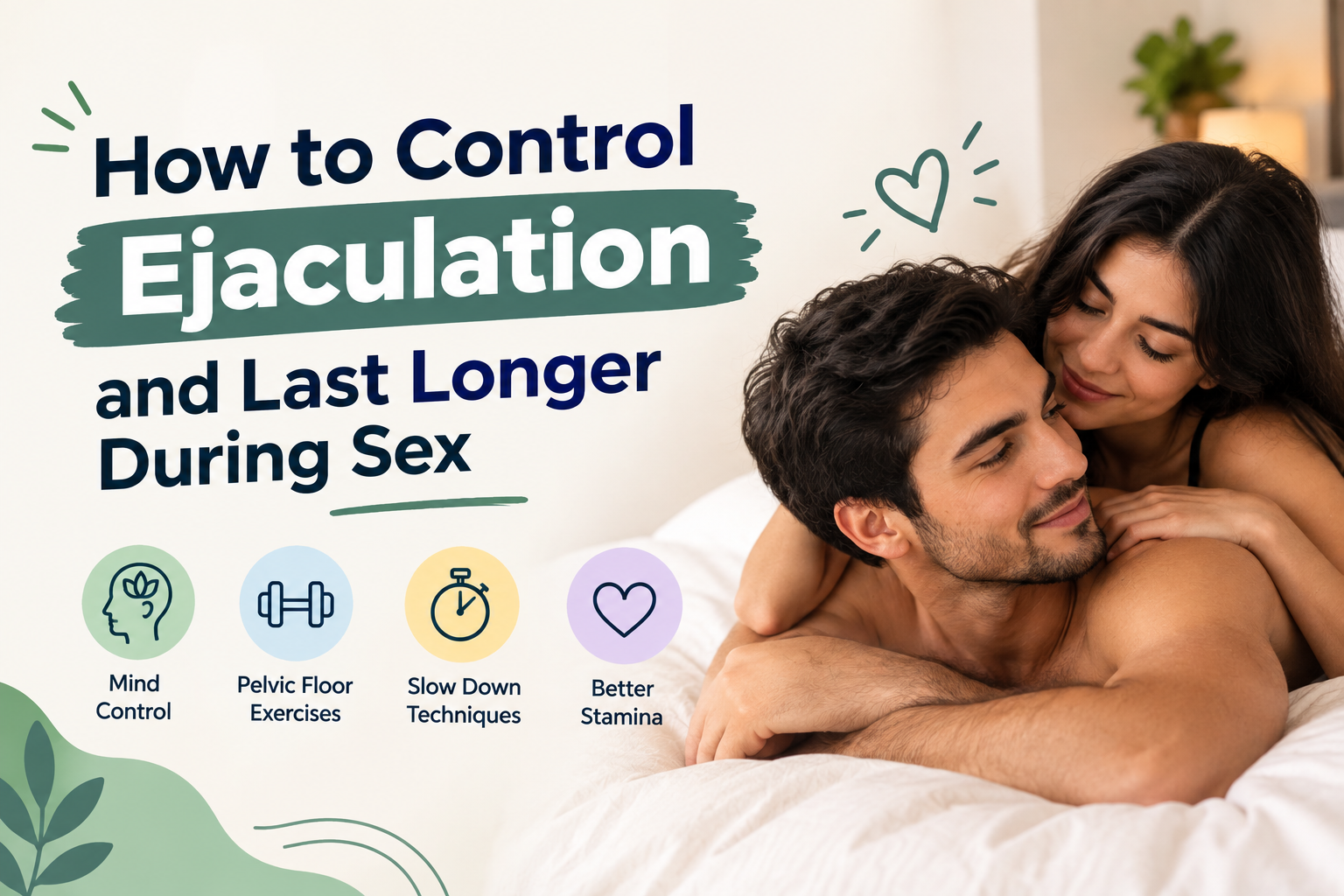
How to Control Ejaculation and Last Longer During Sex
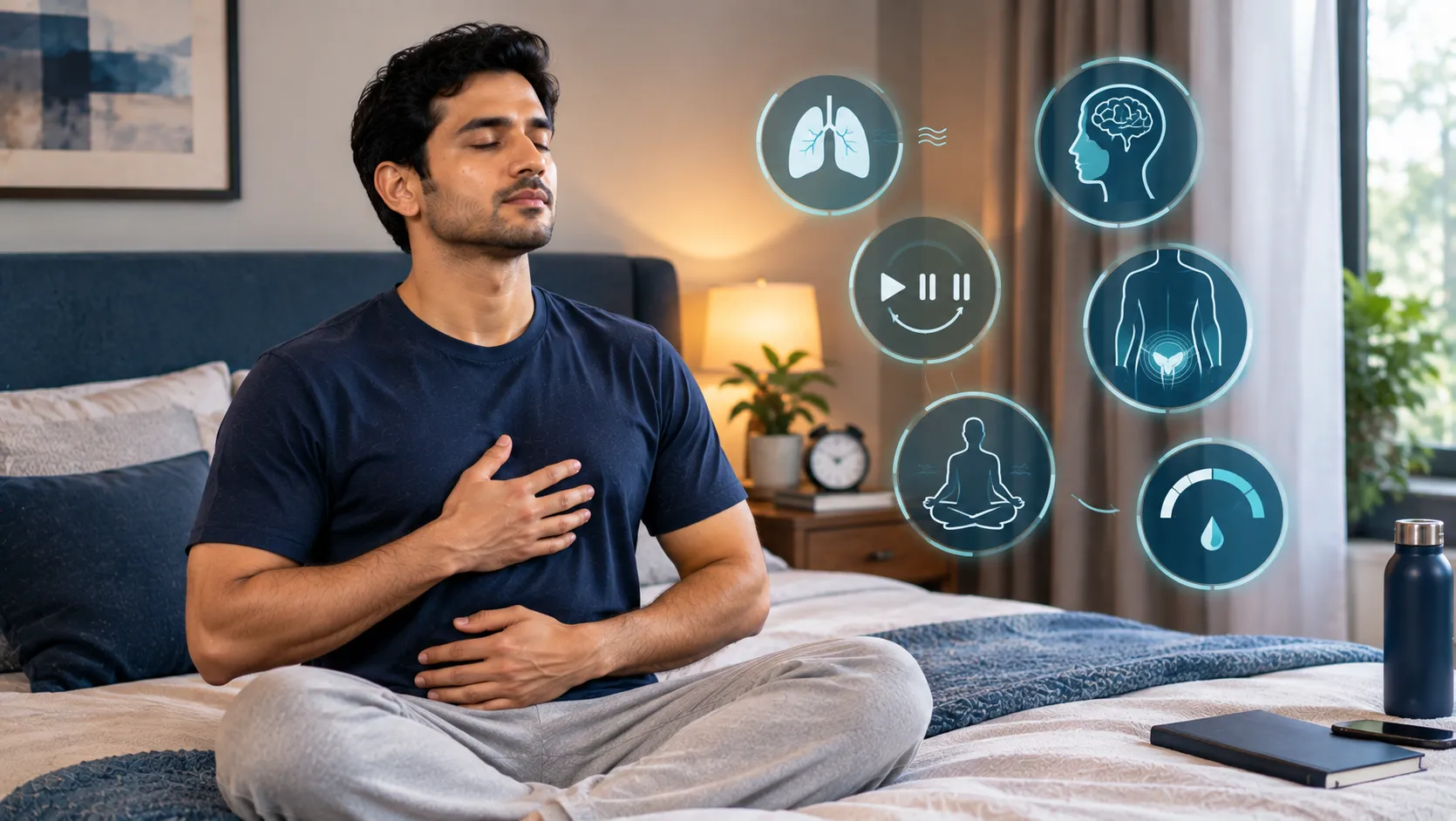
There is no single technique that works for every man. Think of the following strategies as skills you can experiment with and develop over time.
1. Learn Your Arousal Levels
One of the most useful things you can do is become familiar with how arousal builds.
Pay attention to your breathing, muscle tension, changes in sensation, and the point at which ejaculation starts feeling increasingly difficult to control.
Try to distinguish between arousal that is still manageable and the point where ejaculation feels almost inevitable.
This awareness usually takes practice. You do not need to master it during one sexual encounter.
2. Use the Start-Stop Technique
The start-stop technique is a simple way of practicing ejaculation control.
When you notice that ejaculation is getting close:
- Reduce or stop stimulation.
- Take a moment to breathe and relax.
- Allow your arousal to come down.
- Resume sexual activity when you feel more in control.
The purpose is not to repeatedly push yourself to the absolute edge. It is to become better at recognizing when you need to slow down.
With practice, you may become more familiar with your body’s arousal pattern.
3. Practice Slow, Deep Breathing
People often hold their breath or tense their muscles when arousal becomes intense.
Instead, try to keep your breathing slow and steady. Take deeper breaths and consciously relax your shoulders, abdomen, and pelvic area.
Breathing will not magically delay ejaculation, but it can help you stay calmer and more aware instead of becoming overwhelmed by sensation or performance anxiety.
4. Learn Pelvic Floor Control
Pelvic floor exercises, including Kegels, may help some men develop greater awareness and control of the muscles involved in ejaculation.
The important part is learning control rather than simply keeping the muscles tight.
Practice contracting the pelvic floor gently and then fully relaxing it. Avoid constantly squeezing the muscles during sex or doing excessive Kegels in the belief that stronger contraction automatically means better ejaculation control.
If you experience pelvic pain, excessive tension, or difficulty relaxing these muscles, more strengthening may not be the answer. A healthcare professional or pelvic-floor specialist can help assess what is actually happening.
5. Change the Pace of Stimulation
Staying at the same high level of stimulation for too long can make it harder to manage rising arousal.
Changing the pace, taking short pauses, or switching activities can give you more room to stay within a manageable level of arousal.
This is also where communication with your partner matters. You do not have to treat slowing down as a failure. It can simply be part of having a more comfortable and connected sexual experience.
6. Reduce Performance Pressure
The thought “I have to last longer” can quickly turn sex into a test.
Instead of constantly monitoring how many minutes have passed, try paying attention to sensation, connection, pleasure, and your partner’s responses.
Sex does not need to be measured by penetration time. Taking that pressure away can make it easier to stay relaxed and present.
7. Expand the Focus Beyond Penetration
Satisfying sex does not depend entirely on how long penetration lasts.
Kissing, touching, foreplay, affection, and other mutually comfortable sexual activities can all be part of intimacy.
Broadening the focus can reduce the feeling that everything depends on penetration lasting for a particular amount of time. It can also create more opportunities for both partners to enjoy the experience.
Can Kegel Exercises Help With Ejaculation Control?
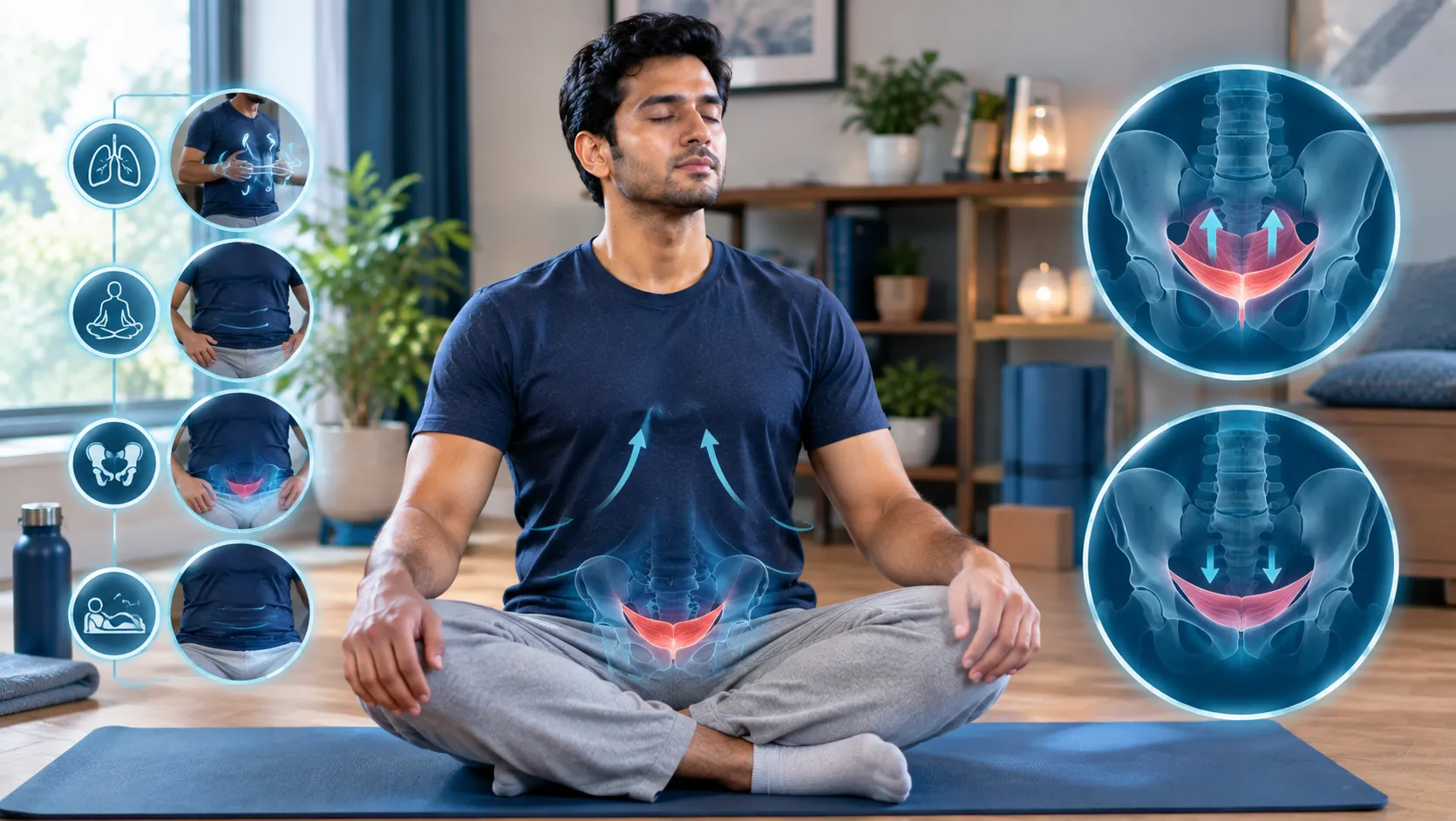
Kegel exercises may help some men become more aware of their pelvic floor and develop better muscular control.
To practice, gently contract the muscles you would use to stop urine flow, hold briefly, and then relax completely. Avoid repeatedly practicing while urinating, as this is not recommended as a regular exercise method.
Start gradually rather than doing large numbers of repetitions.
Remember that pelvic floor control includes relaxation as well as contraction. If your pelvic muscles already feel tight or you experience pelvic discomfort, simply doing more Kegels may not be appropriate.
Can Masturbation Practice Improve Ejaculation Control?
For some men, mindful masturbation can be a useful way to understand their arousal pattern.
Rather than rushing toward orgasm, pay attention to how your level of arousal changes. You can experiment with slowing down or using a start-stop approach when you notice arousal becoming intense.
There is no need to follow a rigid schedule or masturbate excessively to “train” your body.
The goal is awareness, not turning masturbation into another performance test.
Lifestyle Habits That May Support Better Ejaculation Control
Your overall health can influence your sexual wellbeing. Helpful habits include:
- Exercising regularly
- Getting adequate sleep
- Managing ongoing stress
- Limiting excessive alcohol
- Avoiding smoking
- Maintaining a healthy overall lifestyle
- Addressing anxiety and emotional concerns
These habits can support energy, mood, cardiovascular health, and sexual wellbeing, but they are not guaranteed treatments for premature ejaculation.
What Should You Avoid If You Want Better Ejaculation Control?
Some common approaches can create more frustration than improvement.
Avoid:
- Trying to forcibly “hold in” ejaculation
- Constantly squeezing the pelvic floor
- Holding your breath during sex
- Watching the clock
- Comparing your performance with pornography
- Using numbing products without understanding their proper use
- Blaming yourself or your partner
- Expecting one technique to work immediately
- Ignoring persistent ejaculation problems
Better control usually comes from understanding your body’s signals rather than fighting against them.
When Is It Premature Ejaculation Rather Than Occasional Early Ejaculation?
Ejaculating earlier than you wanted once in a while does not automatically mean you have premature ejaculation.
Professionals generally consider several factors, including:
- How consistently it happens
- Whether you have difficulty controlling ejaculation
- Whether the problem causes personal distress
- Whether it affects intimacy or your relationship
PE is common and treatable. You also do not need to diagnose yourself based solely on a specific number of minutes.
If ejaculation consistently happens sooner than you want and is causing significant distress, it is worth discussing with a qualified professional.
When Should You See a Sexologist or Doctor?
Consider seeking professional guidance if:
- You consistently ejaculate sooner than you want.
- The issue causes significant frustration, embarrassment, or relationship distress.
- Behavioral techniques have not helped.
- You also experience erection difficulties.
- You have pelvic pain or discomfort.
- The problem appeared suddenly after previously having good control.
- Anxiety or relationship difficulties are strongly affecting your sexual function.
A sexologist or doctor can look at the broader picture and help identify whether psychological, physical, relationship, or other factors are involved.
If ejaculation concerns are affecting your confidence or relationship, speaking with a professional such as Dr. Neha can provide personalized sexual-health guidance instead of relying on random internet remedies.
Conclusion
Learning how to control ejaculation and last longer during sex is not about forcing your body to delay ejaculation indefinitely. There is also no specific duration that automatically defines good sex.
A better starting point is awareness. Learn how your arousal builds, recognize the early signs, manage unnecessary tension, breathe steadily, and use pauses when you need them. Pelvic floor awareness, start-stop practice, healthier habits, and open communication with your partner may all have a role.
If premature ejaculation continues despite your efforts, there is no reason to feel ashamed or blame yourself. Persistent sexual difficulties deserve proper attention, just like any other health concern.
As Dr. Neha’s approach emphasizes, sexual confidence grows from understanding your body rather than constantly judging its performance. With the right awareness and support, many men can develop a healthier and more comfortable relationship with their sexual wellbeing.
FAQs
1. How can I control ejaculation naturally?
Start by learning your arousal signals, using the start-stop technique, practicing relaxed breathing, and developing better pelvic floor awareness. Stress management and healthy lifestyle habits can also support sexual wellbeing.
2. Can Kegel exercises help me last longer during sex?
They may help some men improve pelvic floor awareness and control. However, excessive tightening can create more tension, so learning to relax the pelvic floor is equally important.
3. Does the start-stop technique help with premature ejaculation?
It can help some men become more aware of rising arousal and practice slowing down before ejaculation becomes unavoidable. It generally requires repeated practice rather than one attempt.
4. Can anxiety make you ejaculate faster?
Yes. Performance anxiety can increase mental and physical tension and make it harder to remain relaxed and aware of arousal.
5. How can I recognize when I am about to ejaculate?
Pay attention to changes in breathing, muscle tension, sensation, and the feeling that ejaculation is getting increasingly difficult to control. Learning these signals takes practice.
6. Can breathing exercises help with ejaculation control?
Slow, steady breathing may help reduce unnecessary tension and keep you more relaxed during sexual activity. It is best used as part of a broader approach to arousal management.