
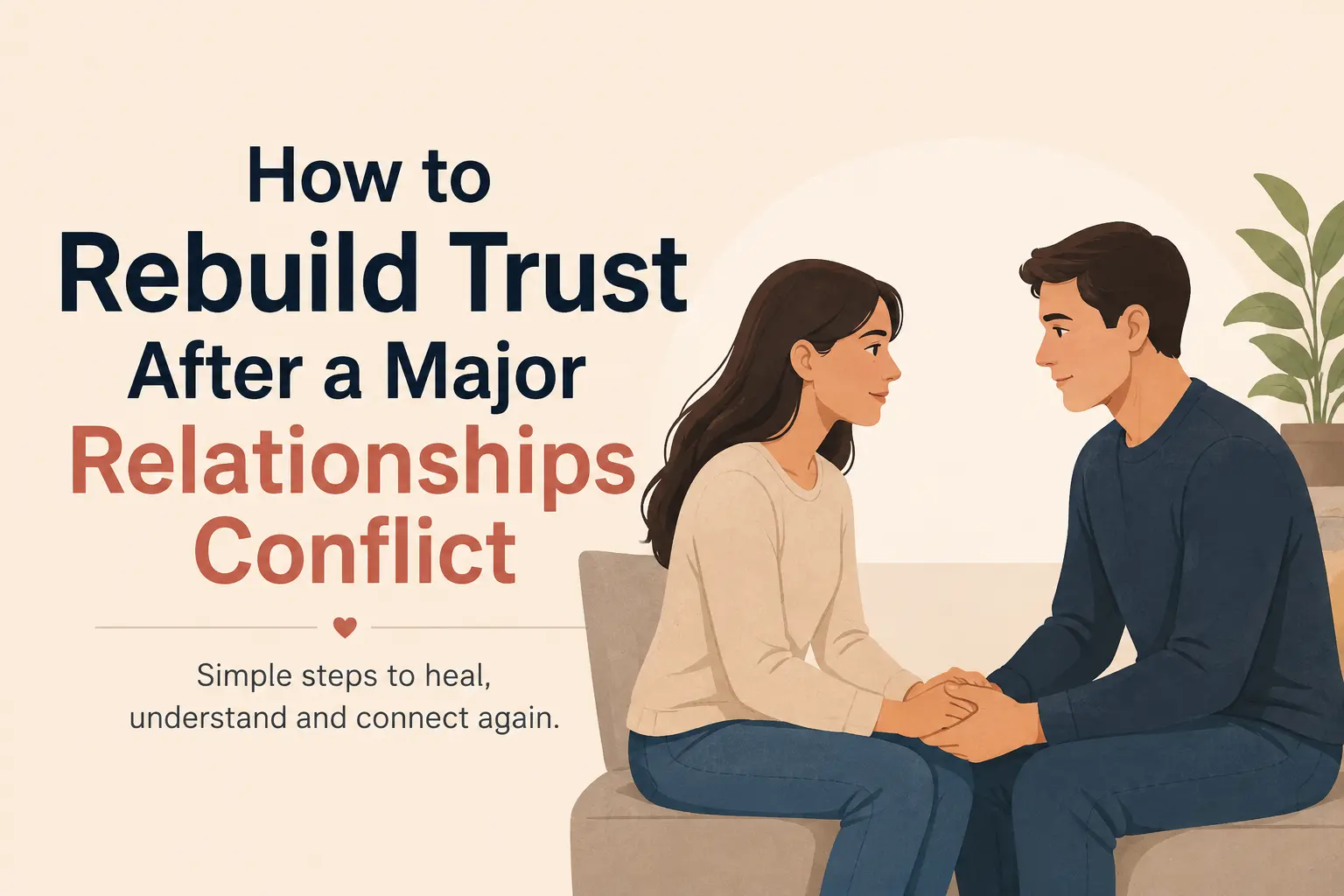
A major conflict can change the way a relationship feels. Even when the argument is technically over, the emotional impact may not disappear with it. One partner may still feel hurt, the other may feel misunderstood, and both may become more careful about what they say or do next.
Thank you for reading this post, don't forget to subscribe!Sometimes the hardest part isn’t ending the argument. It’s feeling safe with each other again afterward.
Rebuilding trust doesn’t mean pretending the conflict never happened. It means understanding what went wrong, taking responsibility where necessary, and slowly creating new experiences of honesty, reliability, and emotional safety. Trust usually returns through what happens after the conflict, not through one perfect apology.
If both partners are willing to repair the relationship, small and consistent changes can make a meaningful difference.
Why Trust Can Be Difficult to Rebuild After a Major Conflict
Trust can be shaken by many things. Harsh words said in anger, broken promises, dishonesty, betrayal, repeated disappointment, or feeling unsupported during an important moment can all change the way one partner sees the other.
And even when someone apologizes sincerely, the hurt may not disappear immediately.
The person who was hurt may need time to process their emotions. However, taking space should never become prolonged silence that damages communication, as this can make rebuilding trust even more difficult.
They might become more cautious, question things they previously accepted without hesitation, or need reassurance before they can fully relax in the relationship.
That’s why rebuilding trust is usually a process rather than a single conversation. An apology can open the door to repair, but consistent behavior is what helps someone believe that things can genuinely be different.
8 Steps to Rebuild Trust After a Major Relationships Conflict
1. Give Each Other Time to Calm Down
Trying to repair a relationship while both people are still angry often leads to another argument. When emotions are high, even a well-intended conversation can quickly turn defensive.
Taking some time to cool down can help both partners think more clearly. The important part is not using space as punishment or avoidance. Let your partner know that you need some time and intend to return to the conversation when you’re calmer.
A pause should create room for repair, not create more uncertainty.
2. Talk Honestly About What Happened
Once you’re both ready, talk about what actually happened instead of brushing it aside.
Avoid minimizing your partner’s experience with statements like “It wasn’t that serious” or “You’re overreacting.” At the same time, both partners should have an opportunity to explain how they experienced the situation.
You may remember the same conflict differently. That’s okay. The goal isn’t to create one perfect version of the story. It’s to understand what happened and why it affected each of you.
3. Take Responsibility for Your Part
Taking responsibility can be uncomfortable, especially when you believe your partner also contributed to the conflict.
But saying, “I shouldn’t have spoken to you that way,” is very different from immediately responding with, “I shouldn’t have, but you made me angry.”
You don’t have to accept blame for something you didn’t do. You simply need to acknowledge your own choices honestly. Taking responsibility shows that you’re more interested in repairing the relationships than proving that you were right.
4. Apologize Without Making Excuses
A meaningful apology focuses on the hurt caused rather than explaining why your behavior was justified.
There’s a difference between saying, “I’m sorry you felt hurt,” and saying, “I’m sorry I said those things. I understand that my words hurt you.”
The second response recognizes your role instead of placing the responsibility for the hurt on your partner’s feelings.
A sincere apology doesn’t guarantee immediate forgiveness, but it can make it easier for the other person to believe that you’ve understood what went wrong.
5. Be Consistent After the Conflict
This is where trust really begins to change.
Promises can sound reassuring in the moment, but repeated actions carry more weight. If you say you’ll call, call. If you’ve agreed to communicate differently, make an effort to do so. If you’ve promised to be more honest, follow through even when honesty feels uncomfortable.
Trust grows when your partner repeatedly sees that your words and actions match.
You don’t need to make dramatic gestures. Often, it’s the ordinary things done consistently that create a sense of security again.
6. Allow Your Partner to Express Their Hurt
The person who was hurt may need to talk about the conflict more than once. That can be frustrating, especially if you feel you’ve already apologized and want the relationship to move forward.
Try to remember that listening doesn’t mean agreeing with every interpretation. It means allowing your partner to explain what the experience felt like for them without immediately becoming defensive.
Sometimes people need to feel understood before they can genuinely let something go.
If you constantly respond with, “We’ve already talked about this,” your partner may feel that their emotions are inconvenient rather than important.
7. Set Clear Boundaries for Future Conflicts
Repair isn’t only about discussing what happened. It’s also about deciding what you’ll do differently next time. Learning healthier ways to handle disagreements can prevent small issues from turning into repeated arguments.
Talk about how you want disagreements to be handled in the future. Maybe that means no insults or name-calling. Perhaps either person can ask for a short break when emotions become overwhelming, with an agreement to return to the conversation later.
You might also decide that difficult subjects shouldn’t be discussed through angry texts or that neither partner will threaten to end the relationship during an argument.
Clear boundaries give both people something practical to work with when the next disagreement happens.
8. Create New Positive Experiences Together
Rebuilding trust shouldn’t mean spending every conversation analyzing the conflict.
Once you’ve addressed what happened, make room for experiences that have nothing to do with the disagreement. Cook together. Go for a walk. Watch something you both enjoy. Laugh. Have a meaningful conversation. Plan something you can look forward to.
Positive experiences don’t erase what happened, but they remind both partners that the relationship is bigger than one painful chapter.
Over time, new memories can help the relationship feel like a place of connection again rather than a place where both people are constantly waiting for the next problem.
What Not to Do When Trying to Rebuild Trust
1. Keep Bringing Up the Conflict to Punish Each Other
Discussing the conflict when it genuinely needs to be addressed is healthy. Using it repeatedly as ammunition during unrelated disagreements is different.
If every new argument becomes a reason to reopen the same wound, moving forward becomes much harder.
2. Demand That Your Partner “Get Over It”
People don’t recover from hurt according to a fixed schedule. One person may feel ready to move forward sooner than the other.
Pressuring your partner to forget what happened can make them feel even less understood. Give healing room while still working toward progress together.
3. Make Promises You Can’t Keep
It’s tempting to promise everything will change immediately after a major conflict. But if those promises aren’t realistic, breaking them can create another layer of disappointment.
Make fewer promises and take them seriously. A small commitment you consistently keep is more valuable than a dramatic promise you can’t maintain.
4. Avoid the Problem Completely
Silence can feel easier than another difficult conversation, especially after a painful argument. But when couples repeatedly avoid difficult conversations, they can gradually become emotionally distant and stop having meaningful conversations with each other.
But avoiding the issue doesn’t necessarily mean the hurt has disappeared.
If something important remains unresolved, it may continue affecting communication and closeness underneath the surface.
5. Expect One Person to Do All the Repair Work
One person may have caused more harm in a particular conflict, but rebuilding the overall relationship often requires effort from both partners.
The person who caused the hurt needs to take responsibility. The other partner also needs space to communicate, set boundaries, and decide what they need to feel safe again.
Repair becomes easier when both people participate.
How Long Does It Take to Rebuild Trust?
There isn’t a universal timeline.
A disagreement involving hurtful words may begin to heal relatively quickly when both partners communicate honestly and change their behavior. More serious situations, such as betrayal, repeated dishonesty, or a long history of broken promises, can take considerably longer.
Rather than asking how many days or weeks it should take, look at what is actually changing. Is there more honesty? Are promises being kept? Are conversations becoming safer? Is defensiveness decreasing? Do both people feel that their concerns are being taken seriously?
Those changes matter more than a specific deadline.
It’s also important to be realistic. Trust can sometimes be rebuilt, but there is no guarantee that every relationship will return to exactly how it was before. In some situations, rebuilding may mean creating a new kind of relationship based on clearer boundaries and a better understanding of what both people need.
When Should Couples Consider Professional Help?
Some conflicts can be worked through privately. Others become difficult to resolve because couples keep falling into the same pattern: one person raises an issue, the other becomes defensive, the conversation escalates, and eventually both withdraw without actually resolving anything.
Professional support can be useful when the same conflict keeps resurfacing, communication regularly becomes hostile, one or both partners feel emotionally stuck, or repeated attempts at repair aren’t making a difference. Relationship counseling can provide a neutral space to understand what’s happening beneath the arguments and learn healthier ways to communicate.
Couples counseling can provide a neutral space to understand what’s happening beneath the arguments and learn healthier ways to communicate. A Relationships and intimacy professional such as Dr. Neha Mehta can also help couples explore difficult emotional patterns without turning the conversation into a competition over who is right.
Seeking help doesn’t mean the relationship has failed. Sometimes it simply means both partners want guidance in repairing something that matters to them.
FAQs
1. Can trust be rebuilt after a major relationship conflict?
Yes, trust can sometimes be rebuilt when both partners are willing to be honest, take responsibility, communicate openly, and make consistent changes. However, the process may take time, particularly when the conflict involved serious betrayal or repeated hurt.
2. How long does it take to rebuild trust in a relationship?
There is no fixed timeline. The length of the process depends on what caused the trust to break, how deeply it affected the relationships, and whether both partners consistently work toward repair.
3. What should I do if my partner doesn’t trust me anymore?
Start by listening rather than demanding that they trust you immediately. Take responsibility for your actions, answer reasonable questions honestly, and allow your behavior over time to show that you’re committed to doing things differently.
4. How do you rebuild trust after hurtful words?
Acknowledge what you said, apologize without making excuses, and recognize how your words affected your partner. Then focus on changing the way you handle future disagreements so the same pattern doesn’t continue.
5. Should I give my partner space after a major conflict?
A little space can be helpful when emotions are still intense. However, make it clear that you’re taking time to calm down rather than abandoning the conversation, and agree on when you’ll reconnect.
6. Can relationships become stronger after a major conflict?
It can. A difficult conflict may encourage couples to understand each other’s needs more clearly and establish healthier boundaries. The outcome depends largely on how both partners respond afterward.
7. What if only one partner wants to rebuild trust?
One person can begin making healthier changes, but rebuilding a relationship generally requires participation from both partners. If one partner consistently refuses communication or repair, professional support may help clarify what options are available.
8. When should couples seek professional help?
Consider professional support when conflicts remain unresolved, communication repeatedly breaks down, or trust problems continue despite sincere efforts. Getting help earlier can sometimes prevent the same patterns from becoming more deeply established.