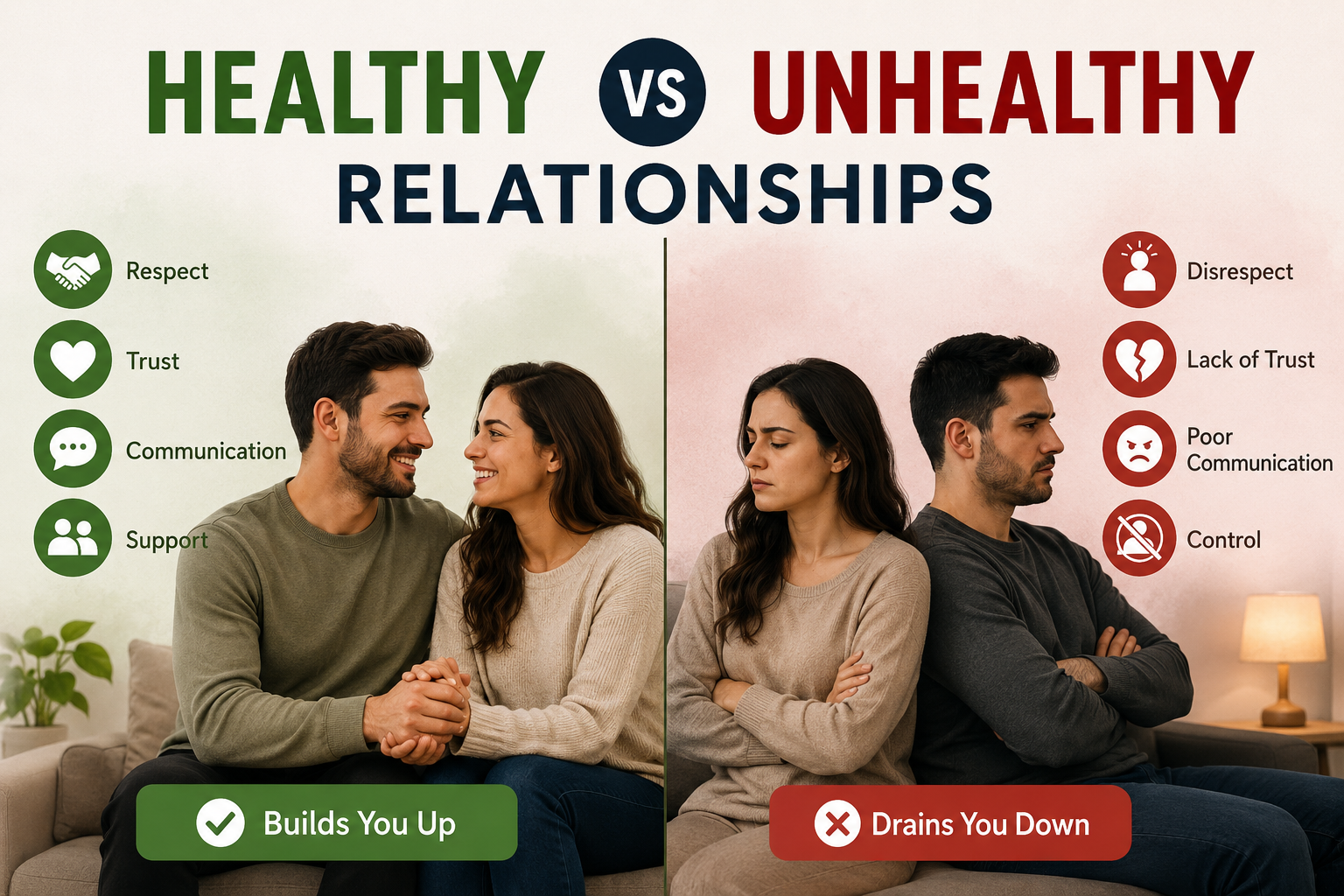
Every relationship has good days and bad days. Disagreements, misunderstandings, and occasional conflicts are a normal part of life we live with someone.
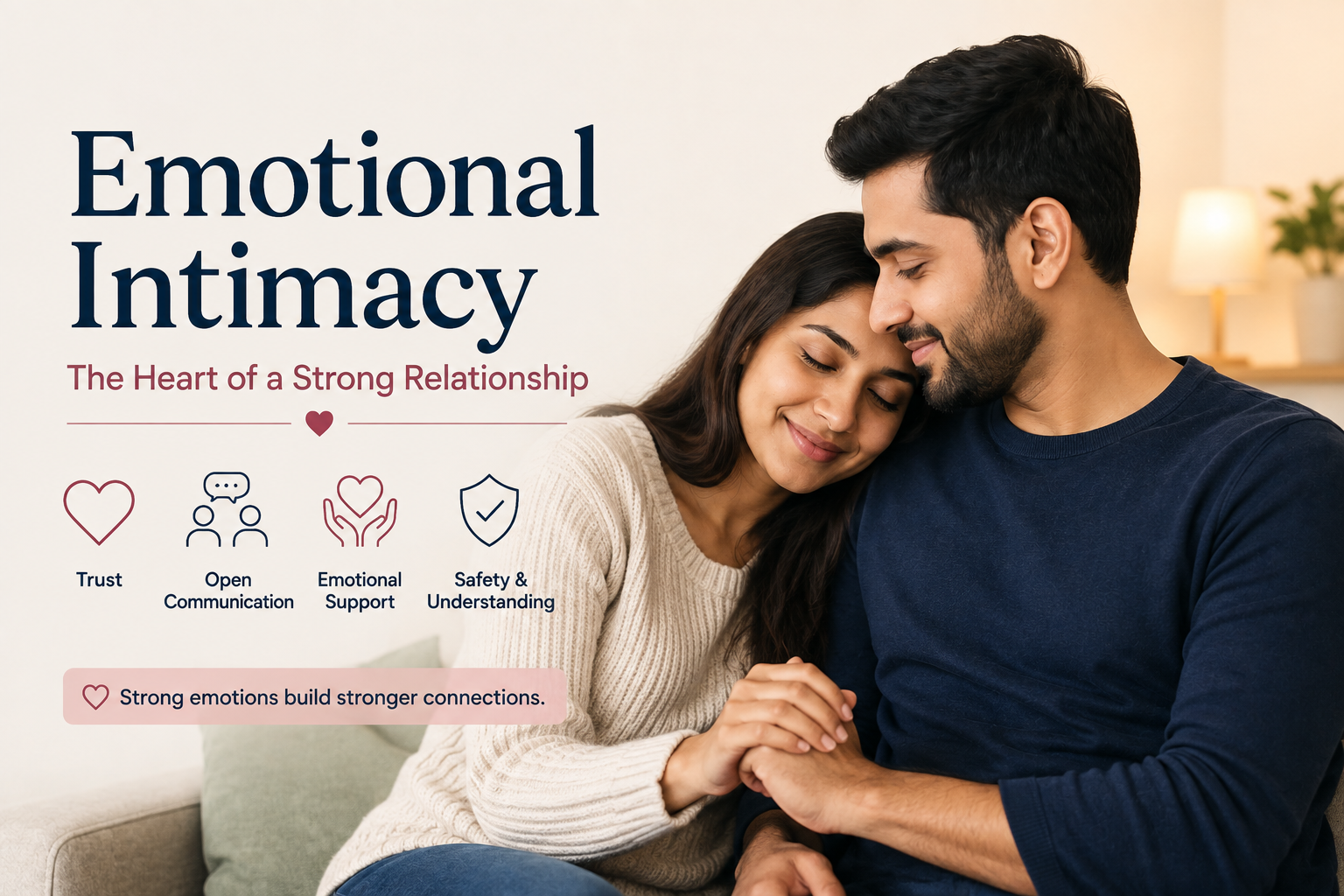
Thank you for reading this post, don't forget to subscribe!A healthy relationship gives you a sense of security, respect, and emotional support. It allows both partners to grow as individuals while building a strong connection together.
An unhealthy relationship, on the other hand, often leaves one or both people feeling anxious, controlled, or emotionally disconnected.
The tricky part is that unhealthy patterns don’t always appear suddenly. They often develop gradually through poor communication, unresolved conflicts, lack of trust, or disrespect for each other’s feelings.
Over time, these small issues can affect the quality of the relationships if they aren’t addressed.
Understanding the difference between healthy and unhealthy Relationships can help you recognize what’s working well, identify areas that need attention, and take positive steps toward building a stronger partnership.
Signs of a Healthy Relationships
1. Feeling Comfortable Being Yourself
One of the strongest signs of a healthy relationship is feeling accepted for who you are. You don’t feel the need to hide your personality, opinions, or emotions to avoid judgment. Instead, both partners create a space where honesty and authenticity are valued, allowing the relationships to grow naturally.
2. Trust Comes Naturally
Trust is built through honesty, consistency, and reliability. In a healthy relationship, you don’t constantly question your partner’s intentions or feel the need to check up on them.
3. Open and Honest Communication
Healthy couples talk openly about their thoughts, feelings, and concerns without fear of being ignored or criticized. Even when conversations are difficult, they approach them with respect and a willingness to understand each other’s perspective rather than trying to win the argument.
If communication has become difficult or conversations often lead to misunderstandings, it may help to recognize the signs of communication problems in a marriage.
4. Supporting Each Other Through Life’s Ups and Downs
Life brings unexpected challenges, and strong relationships are built on mutual support. Whether it’s celebrating achievements or facing setbacks, healthy partners encourage each other and work together instead of facing problems alone.
5. Respecting Each Other’s Boundaries
Healthy Relationships recognize that love doesn’t mean losing your individuality. Both partners respect each other’s personal space, opinions, friendships, and need for time alone. Healthy boundaries create trust and allow both people to feel comfortable and respected.
6. Sharing Responsibilities and Decisions
A strong relationship works as a team. Whether it’s managing finances, household responsibilities, parenting, or making important life decisions, both partners contribute and value each other’s opinions. This sense of partnership creates balance and reduces feelings of unfairness.
7. Resolving Conflicts in a Healthy Way
Disagreements are inevitable, but healthy couples know how to handle them respectfully. Instead of shouting, blaming, or avoiding the issue, they listen to each other, communicate calmly, and work together to find a solution.
When couples struggle to break repeated patterns of conflict, Relationships counseling can help them develop healthier ways to communicate and resolve disagreements. The goal is to strengthen the relationships, not to prove who’s right.
Learning practical conflict resolution tips for couples and relationships can help partners handle disagreements more calmly and avoid repeating the same unhealthy patterns.
Signs of an Unhealthy Relationships
1. Constant Doubts and Lack of Trust
Trust issues can make even simple situations stressful. If you constantly question your partner’s honesty, feel the need to monitor their actions, or struggle to believe what they say, the relationship may lack the trust needed for a healthy connection.
2. Honest Conversations Feel Difficult
Communication becomes unhealthy when one or both partners avoid expressing their feelings because they fear criticism, arguments, or being ignored. Over time, silence replaces honest conversations, creating emotional distance and unresolved resentment.
3. Personal Boundaries Are Not Respected
Everyone has personal boundaries, and ignoring them can damage a relationship. Whether it’s invading privacy, controlling decisions, or dismissing personal needs, repeatedly crossing boundaries often leads to frustration, discomfort, and a loss of trust.
4. Walking on Eggshells Around Each Other
If you constantly worry about saying the wrong thing or changing your behavior to avoid upsetting your partner, the relationship may no longer feel emotionally safe. Healthy Relationships allow both people to express themselves without living in fear of negative reactions.
5. Arguments End Without Any Real Resolution
Every disagreement seems to end the same way,someone walks away, the issue is ignored, or the argument simply repeats later. Without open communication and problem-solving, unresolved conflicts continue to build resentment over time.
6. Feeling More Drained Than Happy
While every relationship has difficult moments, you shouldn’t constantly feel emotionally exhausted. If your relationship leaves you feeling stressed, anxious, or unhappy more often than supported and appreciated, it’s worth reflecting on what’s causing that imbalance.
7. Constant Criticism Instead of Appreciation
Constructive feedback can help a relationship grow, but constant criticism slowly damages confidence and emotional connection. When mistakes are always highlighted while appreciation is rarely expressed, one or both partners may begin to feel undervalued and emotionally distant.
Can Unhealthy Relationships Become Healthy?
Yes, in many cases, an unhealthy relationship can become healthier, but only if both partners are willing to acknowledge the problems and work on them together. Positive change requires honest communication, mutual respect, accountability, and a genuine commitment to improving the relationships.
The first step is recognizing unhealthy patterns instead of ignoring them. Once both partners understand what’s affecting the relationship, they can begin making small but meaningful changes, such as improving communication, respecting boundaries, resolving conflicts calmly, and rebuilding trust through consistent actions.
It’s also important to remember that change doesn’t happen overnight. Rebuilding a healthy relationship takes patience, effort, and consistency from both people. If only one partner is trying while the other refuses to communicate or change harmful behaviors, lasting improvement becomes much more difficult.
In some situations, professional Relationships counseling can provide valuable guidance. A qualified therapist can help couples identify unhealthy patterns, improve communication, and develop healthier ways of handling disagreements and emotional challenges.
However, if a relationship involves ongoing emotional, physical, or psychological abuse, the priority should always be personal safety and seeking appropriate professional support.
Read more: Relationship Counseling in Gurugram
Conclusion
No relationship is perfect, and every couple experiences challenges along the way. What truly matters is how those challenges are handled. Understanding the difference between healthy vs unhealthy Relationships helps you recognize patterns that strengthen your bond and those that may slowly create emotional distance.
If your Relationships feel stuck despite your best efforts, seeking guidance from a qualified Relationships counselor isn’t a sign of failure. It’s a step toward understanding each other better and building a healthier, happier partnership for the future.
FAQs
1. What is the difference between a healthy and an unhealthy relationship?
A healthy relationship is built on trust, respect, honest communication, and mutual support. An unhealthy relationship often involves poor communication, disrespect, constant conflict, lack of trust, or emotional distance, leaving one or both partners feeling unhappy or unsupported.
2. Can unhealthy relationships improve?
Yes, many unhealthy relationships can improve when both partners are committed to making positive changes. Open communication, rebuilding trust, respecting boundaries, and seeking professional guidance when needed can help strengthen the Relationships over time.
3. What are the biggest red flags in a relationship?
Some common red flags include controlling behavior, constant criticism, dishonesty, lack of trust, disrespect for personal boundaries, manipulation, and repeated unresolved conflicts. Recognizing these signs early makes it easier to address problems before they become more serious.
4. Is it normal to argue in healthy relationships?
Yes. Disagreements are a normal part of any relationship because two people won’t always think the same way. The difference is that healthy couples argue with respect, listen to each other, and focus on resolving the issue instead of hurting one another.
5. When should couples seek Relationships counseling?
Couples should consider counseling if communication has broken down, trust has been damaged, the same arguments keep repeating, or emotional distance continues to grow despite their efforts. Seeking help early can provide practical tools to rebuild connections and improve relationships.