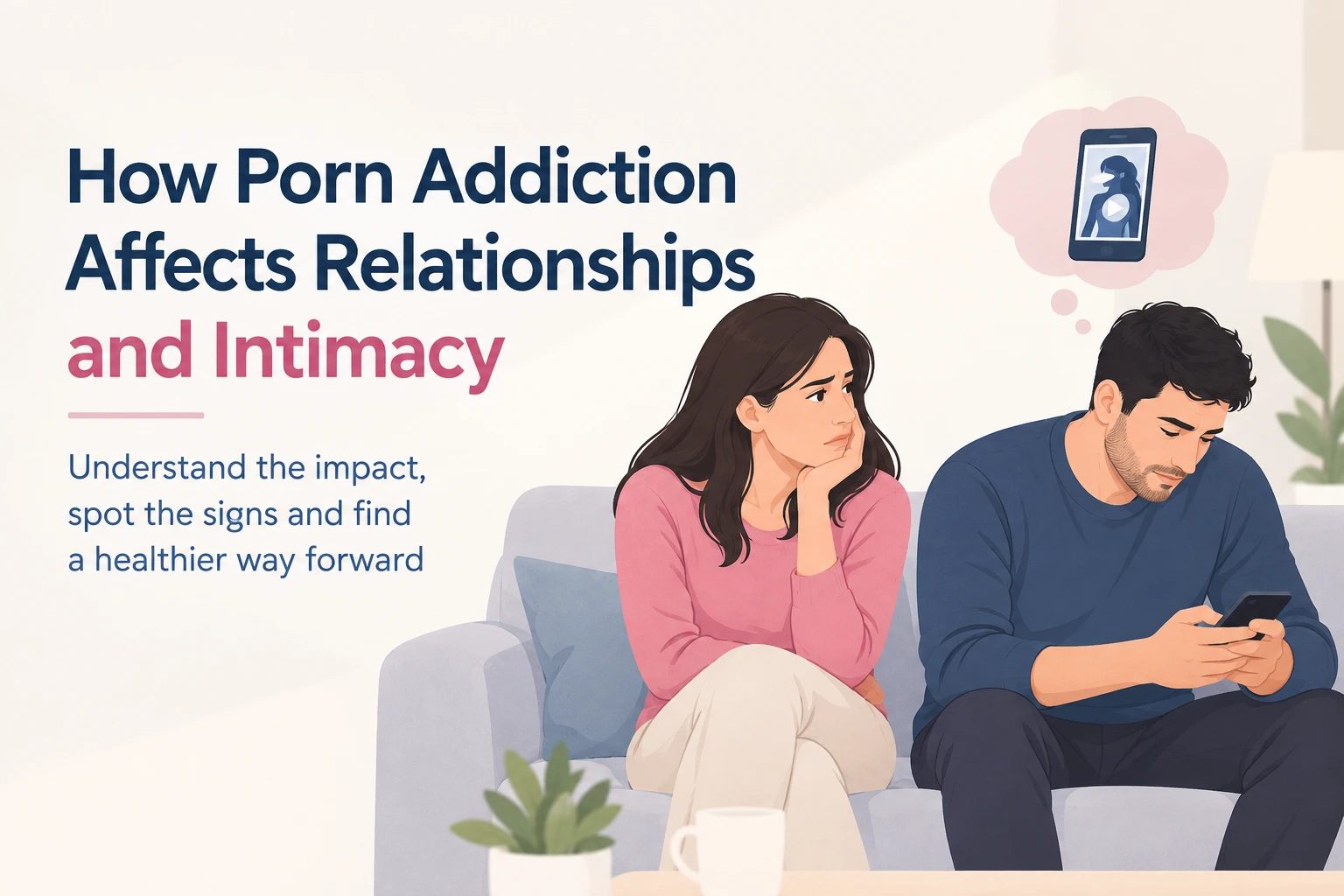
Pornography can be a private part of someone’s life without necessarily causing a problem. But when pornography use becomes difficult to control, hidden from a partner, or starts interfering with trust, communication, sex, or everyday responsibilities, it can become a genuine relationship concern.
Thank you for reading this post, don't forget to subscribe!This is where conversations about porn addiction and relationships often become complicated. Watching pornography does not automatically mean someone is addicted, unfaithful, dissatisfied with their partner, or damaging their relationship. What matters more is the role pornography is playing in their life.
For some people, problematic or compulsive pornography use can become a way of coping with stress, loneliness, boredom, rejection, or difficult emotions. Over time, secrecy and repeated use can create emotional distance between partners. It may also influence sexual expectations, arousal patterns, or the way intimacy is experienced.
Understanding How Porn Addiction Affects Relationships and Intimacy therefore requires more than asking, “How often does someone watch porn?” The more useful questions are: Can they control their use? Are they hiding it? Is it creating distress? Is it replacing connection? And what impact is it having on the relationship?
What Is Porn Addiction or Problematic Porn Use?
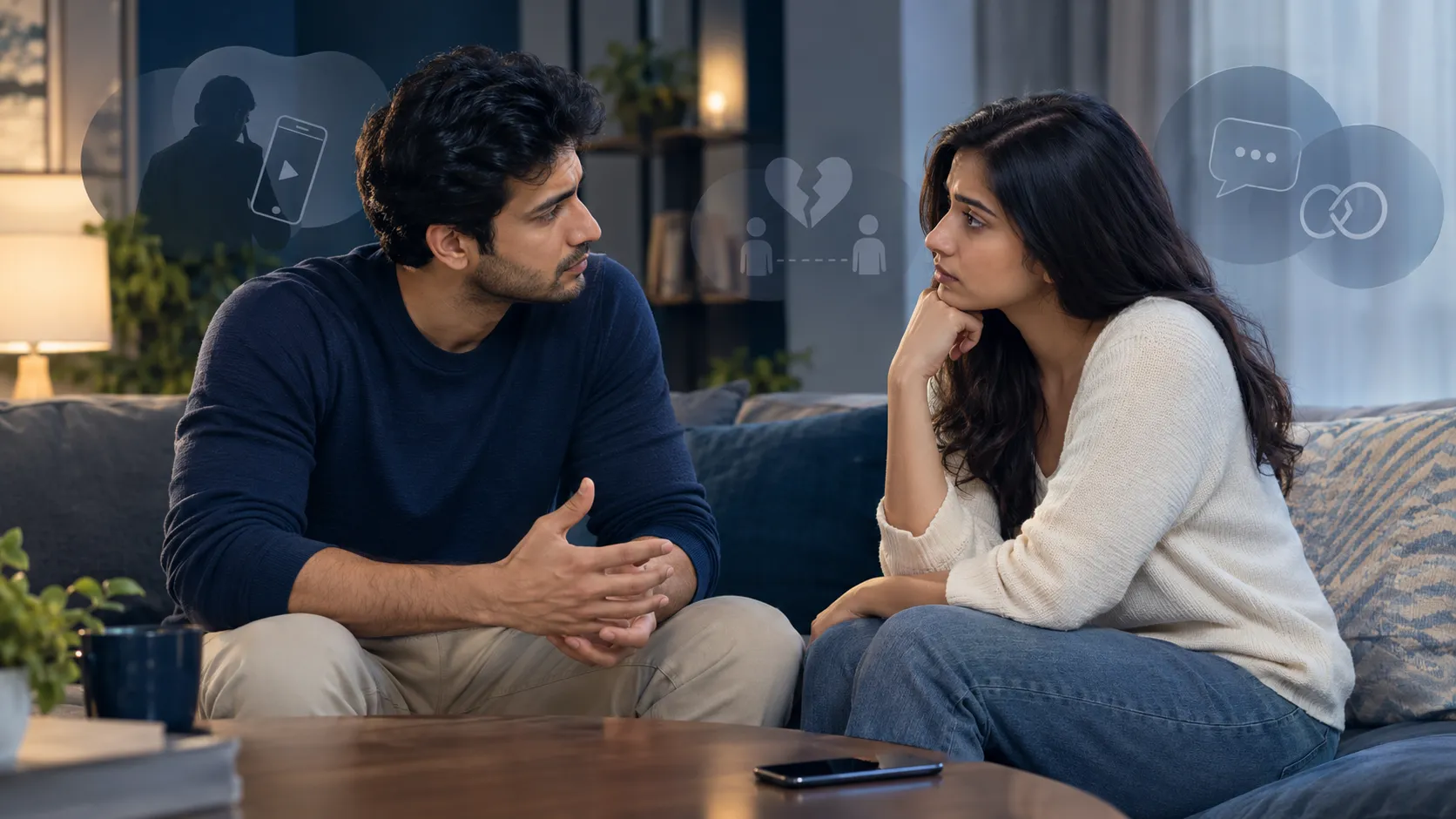
“Porn addiction” is a term commonly used by the public to describe pornography use that feels excessive, compulsive, or difficult to control. Clinically, however, frequency alone does not establish an addiction.
A person may watch pornography regularly without experiencing significant problems. On the other hand, someone may use it less frequently but still feel unable to control the behavior or repeatedly continue despite serious consequences.
Problematic porn addiction use may involve patterns such as:
- Repeatedly trying and failing to reduce or stop pornography use
- Spending excessive amounts of time consuming pornography
- Continuing to use it despite relationship problems
- Hiding or lying about porn addiction
- Experiencing significant distress related to the behavior
- Neglecting responsibilities because of pornography use
- Using pornography primarily to escape difficult emotions
- Repeatedly breaking relationship agreements around pornography
Context matters too. A person’s distress may be influenced by cultural, religious, personal, or relationship beliefs about pornography. Feeling guilty about watching pornography does not, by itself, prove compulsive use.
The focus should be on control, function, consequences, and impact, rather than simply counting how often someone watches.
How Porn Addiction Can Affect Relationships
Secrecy and Loss of Trust
One of the most painful effects of problematic pornography use may not be the pornography itself. It can be the secrecy surrounding it.
If someone repeatedly hides their browsing history, lies about how often they watch pornography, or denies behavior that their partner later discovers, trust can begin to erode.
The other partner may start wondering, “What else don’t I know?”
This can lead to feelings of betrayal, insecurity, anger, or confusion. Even when both partners have different opinions about pornography, dishonesty can become a separate relationship issue.
In some relationships, the secrecy becomes more damaging than the original disagreement about pornography.
Emotional Distance
Compulsive pornography use can consume time, attention, and emotional energy. When that happens repeatedly, a partner may begin to feel ignored or emotionally unimportant.
Perhaps conversations become shorter. Quality time decreases. Affection feels different. One partner spends more time alone with a screen instead of being emotionally present in the relationship.
Over time, this can create emotional disconnection.
The problem is not necessarily that pornography exists. It is that the relationship may gradually receive less attention, availability, and emotional investment.
More Conflict and Resentment
Pornography can become a recurring argument in relationships.
One partner may want the behavior to stop completely. The other may see it as private or harmless. Arguments can then shift from the original issue to accusations, defensiveness, monitoring, and withdrawal.
A cycle may develop:
One partner feels hurt → asks for reassurance → the other feels criticized → becomes defensive or withdraws → trust decreases → conflict returns.
Without honest communication, resentment can quietly build underneath the relationship.
Feeling “Not Enough” as a Partner
A partner may also begin comparing themselves with people they see in pornography.
They may wonder:
“Am I not attractive enough?”
“Is my body not enough?”
“Does my partner prefer them?”
“Am I not sexually exciting?”
These thoughts can be deeply painful, but pornography should not be treated as a realistic standard for a partner’s body, sexual performance, or relationship.
Pornography is generally produced as entertainment. It can involve scripting, performance, editing, selective casting, and unrealistic portrayals of sex.
A partner’s pornography use does not automatically determine their attraction to you or your worth as a person.
How Problematic Porn Use Can Affect Sexual Intimacy
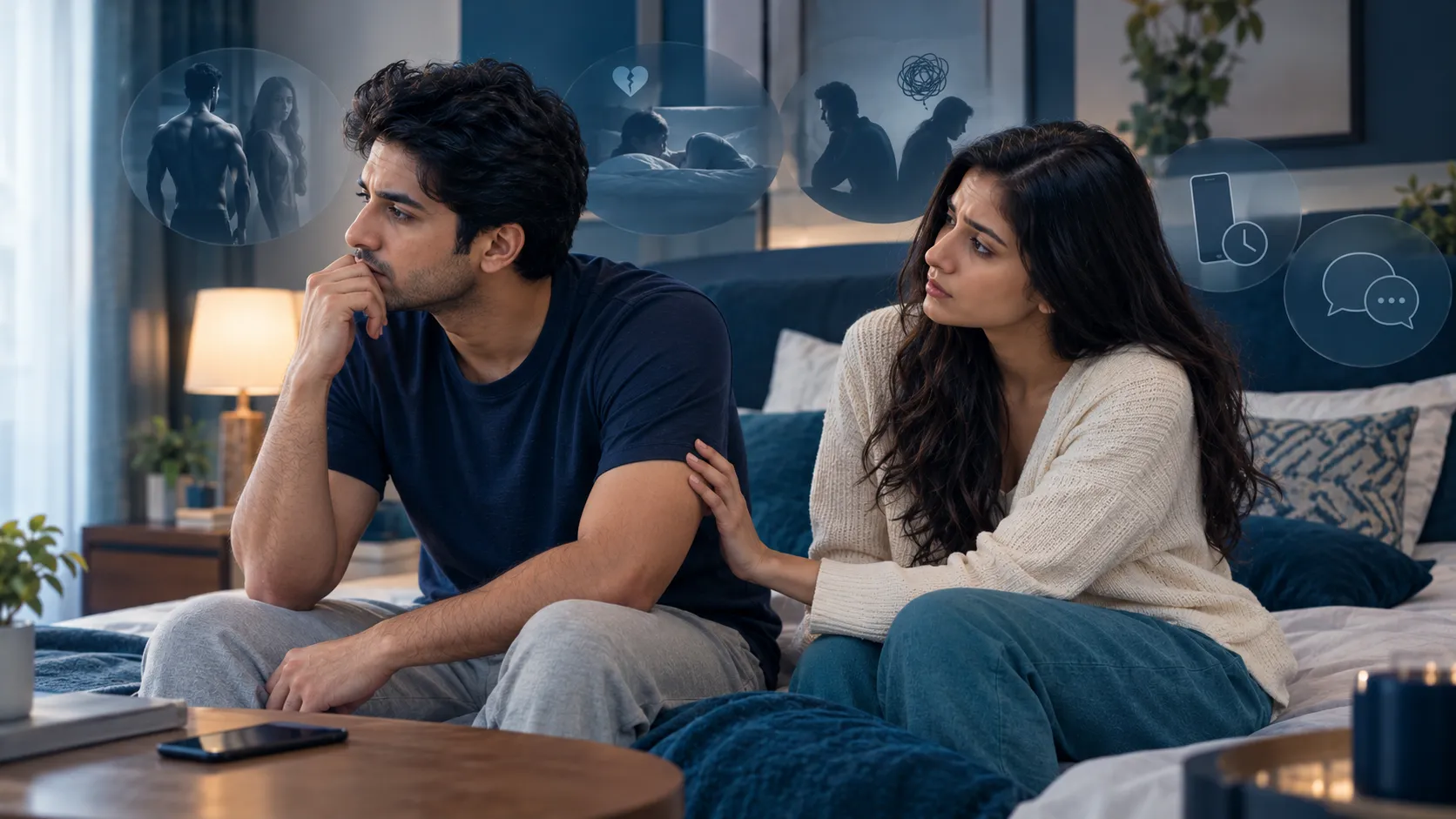
The effects of pornography and intimacy are not identical for everyone. Some people notice changes in their sexual experiences; others do not.
Changes in Sexual Desire
For some individuals, excessive or compulsive pornography use may become closely tied to their patterns of sexual arousal or desire.
A person may increasingly seek pornography when they are stressed, bored, or emotionally uncomfortable. In some cases, this can become a preferred form of sexual stimulation.
But it is important not to assume that pornography inevitably lowers libido or attraction toward a partner. Sexual desire is influenced by many factors, including stress, relationship quality, sleep, physical health, medications, hormones, mood, and personal sexual preferences.
Unrealistic Sexual Expectations
One of the more obvious ways pornography can influence sexual intimacy is through expectations.
Pornography may portray particular body types, sexual behaviors, frequency, reactions, or levels of performance as normal or desirable. Real-life intimacy is usually much less scripted.
Real sex involves communication, awkward moments, changing preferences, emotional vulnerability, consent, boundaries, and two people responding to each other.
Problems can arise when fantasy becomes a benchmark for what sex “should” look like.
Healthy intimacy does not require either partner to reproduce something they have seen on a screen.
Difficulty Being Present During Sex
Some people may become strongly accustomed to particular types of stimulation, fantasies, or pornography-related routines.
If this begins affecting partnered sex, they may find it harder to stay mentally present or engaged with their partner.
Sex can then start feeling less like a shared experience and more like an attempt to recreate a particular form of stimulation.
This does not mean pornography inevitably causes sexual problems. Rather, if someone notices that their sexual experiences are becoming increasingly dependent on pornography, it may be worth exploring the pattern.
Erectile or Arousal Concerns
People sometimes search for answers to questions about pornography and erectile dysfunction after experiencing changes in sexual performance.
However, erectile difficulties have many possible causes. Anxiety, relationship conflict, depression, medical conditions, medications, sleep problems, hormonal factors, and other physical or psychological issues can all contribute.
Pornography should therefore not automatically be blamed for erectile dysfunction.
If erection or arousal problems are persistent, sudden, or distressing, discussing them with an appropriate healthcare professional is important.
Reduced Emotional Intimacy During Sex
Sex can become physically intimate without feeling emotionally intimate.
If one partner feels that pornography has become a substitute for shared sexual connection, they may experience sex as less personal, less affectionate, or less emotionally fulfilling.
This is particularly painful when the couple already feels disconnected outside the bedroom.
Emotional safety matters. Sometimes rebuilding intimacy begins not with sex, but with conversation, affection, attention, and feeling emotionally seen again.
Signs Pornography May Be Affecting Your Relationship
There is no single checklist that proves someone has a pornography addiction. However, certain patterns deserve attention.
These may include:
- Increasing secrecy around devices or browsing
- Repeated arguments about pornography
- Consistently choosing pornography over partnered intimacy
- Reduced interest in shared sexual experiences
- Difficulty becoming sexually aroused without pornography
- Feeling emotionally distant from a partner
- Repeatedly breaking agreements about pornography
- Spending significant time or money on pornography
- Repeatedly trying to stop or reduce use without success
- Relationship problems continuing despite recognizing the impact
The important question is not simply, “Does my partner watch porn?”
It is, “What is this behavior doing to our relationship?”
Why Someone May Use Pornography Compulsively
Stress and Emotional Coping
Pornography can sometimes become a quick escape from uncomfortable emotions.
Someone may use it after a stressful day, when feeling lonely, rejected, anxious, bored, or emotionally overwhelmed.
The temporary relief can reinforce the behavior. Over time, the brain begins associating a particular emotional state with a familiar coping response.
This does not make someone weak or morally flawed. It means the behavior may have become part of a learned emotional pattern.
Boredom and Habit
Not every episode of pornography use begins with strong sexual desire.
Sometimes it becomes habitual.
A particular time of day, being alone, using a phone in bed, feeling bored, or scrolling online may become associated with pornography. Eventually, the behavior can feel almost automatic.
Recognizing these triggers can be an important part of changing the pattern.
Relationship Difficulties
Conflict, rejection, loneliness, or emotional disconnection may contribute to increased pornography use.
But the relationship can also be affected by the pornography use itself.
That creates a difficult loop:
Relationship problems can trigger pornography use, while pornography-related secrecy or disconnection can create more relationship problems.
Breaking that cycle requires looking at both sides rather than blaming only one partner.
Sexual Dissatisfaction or Curiosity
Sexual curiosity or dissatisfaction can also influence pornography use.
But watching pornography does not automatically mean someone is unhappy with their partner.
People may consume pornography for many different reasons, and assuming that it always reflects dissatisfaction can create unnecessary insecurity.
Mental and Emotional Factors
Loneliness, anxiety, low mood, emotional stress, or other difficulties may coexist with problematic pornography use.
That does not mean everyone who watches pornography has an underlying mental health condition.
Instead of self-diagnosing, it can be more useful to ask what purpose the behavior serves and whether the person feels genuinely in control of it.
How to Talk to Your Partner About Pornography
Choose the Right Moment
Do not begin the conversation immediately after discovering pornography or during an argument.
Choose a calm, private moment when both partners have enough emotional space to actually listen.
Talk About Impact, Not Character
Instead of saying, “You are addicted,” try describing what you are experiencing.
For example:
“I feel disconnected from you when pornography becomes more important than our time together.”
This keeps the conversation focused on behavior and impact rather than shame or character attacks.
Discuss Boundaries Clearly
Couples can have different boundaries around pornography.
Talk openly about what each person considers acceptable or unacceptable.
This may include frequency, secrecy, interactions with other people, financial spending, shared devices, and whether previous agreements have been respected.
A boundary is most useful when it is clear and mutually understood.
Listen to Both Perspectives
The partner who feels hurt deserves space to express that hurt.
At the same time, the person using pornography should have an opportunity to explain what is happening without immediately being labeled or attacked.
Understanding why someone uses pornography does not mean excusing harmful behavior.
It means understanding the pattern well enough to change it.
Agree on Practical Changes
If both partners want to work on the issue, agree on realistic changes.
This could involve greater honesty, reducing specific triggers, spending more intentional time together, seeking therapy, or creating clearer boundaries.
Accountability should support change, not turn one partner into a parent monitoring the other.
How to Rebuild Intimacy After Problematic Porn Use

Rebuilding intimacy after porn addiction is usually not about one dramatic conversation.
Trust is rebuilt through repeated experiences of honesty and emotional safety.
Start with small things.
Spend time together without phones. Talk about something other than the problem. Reintroduce affection without expecting sex to follow. Make room for laughter, physical closeness, shared activities, and ordinary moments of connection.
When both partners feel ready, talk about sexual expectations too.
What feels good? What feels uncomfortable? What kind of intimacy does each person want? Are there experiences either partner feels pressured to recreate because of pornography?
Most importantly, do not pressure someone into sex as proof that the relationship is “fixed.”
Physical intimacy becomes healthier when both people feel safe, willing, and emotionally connected.
Can a Relationship Recover From Porn Addiction?
Yes, relationships can recover from problematic pornography use.
But recovery is rarely just about stopping pornography.
A couple may also need to rebuild trust, improve communication, understand emotional triggers, repair broken agreements, and rediscover intimacy.
The person struggling with pornography may need to work on emotional regulation and healthier coping strategies. The other partner may need space to process hurt, insecurity, or betrayal.
Progress can be uneven.
One honest conversation does not automatically repair months or years of secrecy. Consistent behavior matters more than promises made during an emotional moment.
And while many couples can rebuild their relationship, not every relationship has to be saved. Each person is allowed to have boundaries and make decisions about what they are willing to accept.
When Should You Seek Professional Help?
Professional support may be helpful when:
- Attempts to control pornography use repeatedly fail
- Pornography interferes with work, relationships, or responsibilities
- Secrecy and broken agreements continue
- Arguments about pornography have become constant
- Sexual intimacy has significantly deteriorated
- Either partner feels overwhelmed by shame, anger, or distress
- The same relationship conflicts keep repeating
- One or both partners feel unable to rebuild trust alone
A qualified therapist, sexologist, or relationship counselor can help explore both the individual behavior and the relationship dynamics surrounding it.
For couples, therapy is not necessarily about deciding who is right or wrong. It can provide a structured space to understand what happened, communicate more safely, and decide what needs to change.
Frequently Asked Questions
Can porn addiction ruin a relationship?
Problematic pornography use can seriously affect a relationship when it involves secrecy, broken agreements, emotional withdrawal, conflict, or replacing partnered intimacy. However, watching pornography does not automatically ruin a relationship.
How does pornography affect intimacy between couples?
For some couples, problematic use may contribute to emotional distance, unrealistic expectations, reduced partnered sexual connection, or difficulty being present during intimacy. The impact varies from person to person.
Can watching too much porn reduce attraction to your partner?
It can affect sexual patterns or expectations for some people, but it does not automatically reduce attraction to a partner. Attraction is influenced by many emotional, psychological, relational, and physical factors.
Can porn addiction cause erectile dysfunction?
Pornography should not automatically be considered the cause of erectile dysfunction. ED has many possible physical and psychological causes. Persistent erection difficulties deserve proper evaluation rather than self-diagnosis.
How can I help my partner with porn addiction?
Avoid shame and constant monitoring. Explain how the behavior affects you, discuss boundaries, encourage professional support when appropriate, and allow your partner to take responsibility for their own change.
How do I talk to my partner about their pornography use?
Choose a calm moment. Talk about specific behaviors and their impact rather than attacking your partner’s character. Be honest about your feelings, listen to their perspective, and discuss clear boundaries.
Final Thoughts
Pornography use is not automatically a relationship problem, and labeling every regular viewer as “addicted” can create unnecessary shame.
The more important question is what happens when pornography becomes compulsive, secretive, difficult to control, or begins replacing emotional and sexual connection.
That is where the effects of porn addiction on relationships can become significant.
Shame rarely creates lasting change. Honest conversations, clear boundaries, emotional safety, and consistent behavior are much more useful starting points.
If you or your partner are struggling with compulsive pornography use, relationship difficulties, emotional disconnection, or sexual intimacy concerns, professional guidance can provide a safe place to understand what is happening without judgment.
Dr. Neha can help you explore the emotional, relationship, and intimacy concerns behind the problem and work toward healthier communication and connection through confidential, professional support.