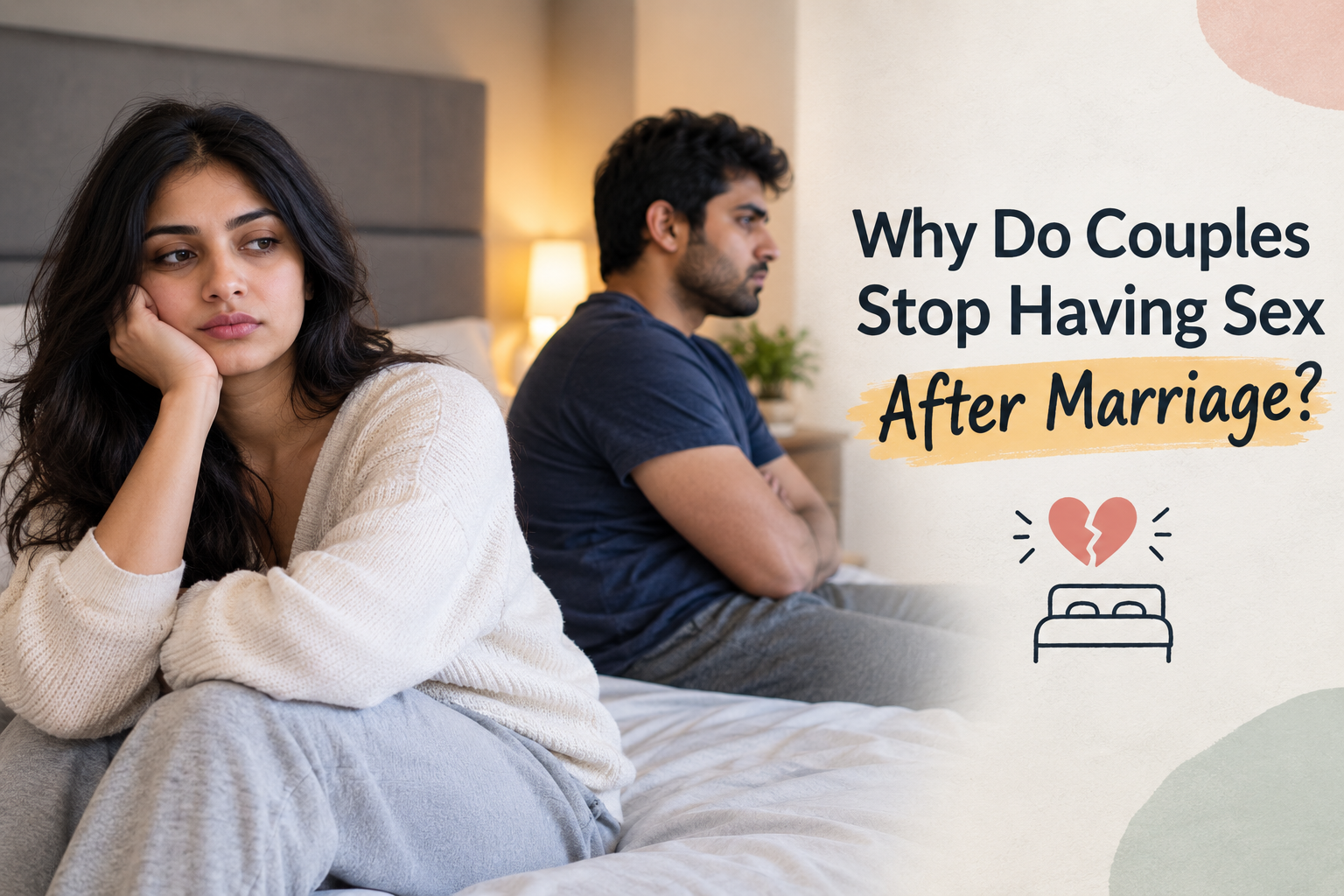
Many couples notice that sex becomes less frequent after marriage. For some, the change happens slowly. There may not be one particular day when intimacy stops. Instead, work gets busier, responsibilities increase, sleep becomes harder to find, and conversations slowly shift from romance to routines and responsibilities.
Thank you for reading this post, don't forget to subscribe!So, why do couples stop having sex after marriage? Marriage itself is not necessarily the reason. Sexual intimacy can change as a relationship moves through different stages of life. Stress, emotional distance, parenting, health concerns, changes in desire, body image, unresolved conflict, and simply feeling exhausted can all play a role.
A decrease in sex also does not automatically mean that love or attraction has disappeared. The more useful question is: How does the change make both partners feel?
If both people are comfortable with their level of intimacy, there may not be a problem to solve. But if one or both partners feel rejected, lonely, frustrated, pressured, or disconnected, the change deserves some attention. Rather than focusing only on how often a married couple has sex, it can be more helpful to understand what has changed between the two people and what they may need from each other now.

Is It Normal for Sex to Decrease After Marriage?
Yes. Sexual frequency can naturally change throughout a long-term relationship. There is no universal number that defines how often a married couple “should” have sex. Some couples may have sex several times a week, others much less often, and some may go through periods with little or no sex.
Desire is influenced by many parts of life. Stress, sleep, health, hormones, pregnancy, parenting, work pressure, relationship dynamics, medication, and emotional wellbeing can all affect sexual interest. The important distinction is whether the change is comfortable for both partners.
A lower frequency is not automatically unhealthy if both people are happy with their intimate relationship. It becomes more important to address when there is ongoing distress, resentment, avoidance, a significant mismatch in desire, pain, recurring sexual difficulties, or a sudden unexplained change. There is no “correct” number. There is only what works for the people in that relationship.
Why Do Couples Stop Having Sex After Marriage?
There is rarely just one explanation. Sometimes several factors overlap, making it difficult for a couple to identify where the problem actually started.
1. Stress and Mental Overload
Stress can leave very little room for sexual desire. Work deadlines, financial worries, family responsibilities, household tasks, and constant mental planning can keep the mind switched on long after the day is technically over.
When someone is mentally exhausted, moving from “What needs to be done tomorrow?” to feeling relaxed, present, and interested in intimacy is not always easy. Ongoing stress can also affect sleep, mood, energy, and sexual response. So even when there is love and attraction, the body and mind may simply not be in the mood for sex.
2. Relationship Conflicts and Emotional Distance
Sexual intimacy does not exist separately from the rest of a relationship. If a couple has been arguing frequently, carrying unresolved resentment, or feeling emotionally ignored, that distance can affect sexual desire too.
For some people, feeling emotionally safe and connected is closely tied to wanting physical intimacy. When someone feels criticized, unsupported, unheard, or angry with their partner, becoming physically close may feel difficult. This does not mean every couple must resolve every disagreement before having sex. It simply means that unresolved relationship issues can influence how intimacy feels.
3. Routine and Relationship Fatigue
The excitement of a new relationship naturally changes over time. That does not mean attraction has disappeared. Long-term relationships simply have a different rhythm. Marriage can gradually become centered around work, household responsibilities, family commitments, and predictable routines. When every day starts looking similar, romance and intimacy may stop receiving intentional attention.
Routine itself is not the problem. Stability can be comforting. The challenge is making sure the relationship does not become only about managing life together.
4. Children and Changing Responsibilities
Pregnancy, childbirth, parenting, and childcare can significantly change a couple’s life. There may be less privacy, interrupted sleep, physical recovery, breastfeeding, new responsibilities, and very little uninterrupted time together. When someone is exhausted, sexual desire may understandably take a back seat.
Hormonal and physical changes during pregnancy and after childbirth can also affect sexual wellbeing. But parenthood should not be treated as the explanation for every change in intimacy. Every couple’s experience is different, and other emotional, physical, or relationship factors may also be involved.
5. Different Levels of Sexual Desire
One partner may want sex more often than the other. This is common and does not automatically mean that the couple is incompatible or that one person loves the other less. Problems can develop when the difference turns into a repeated cycle of pressure and rejection.
The higher-desire partner may feel unwanted, while the lower-desire partner may begin feeling pressured or guilty. Over time, sex can start to feel like an obligation rather than something both people genuinely want. Talking openly about desire, expectations, affection, and boundaries is usually more productive than trying to determine who is “normal.”
6. Body Image and Sexual Confidence
Our relationship with our own body can influence how comfortable we feel during intimacy. Weight changes, pregnancy, aging, illness, scars, physical changes, or simply feeling less confident can make someone self-conscious.
A person may avoid intimacy not because they have stopped desiring their partner, but because they do not feel comfortable being seen or touched. These feelings can be difficult to discuss because body image is often deeply personal. A supportive partner can make a difference by creating an environment where intimacy does not feel like an evaluation of appearance.
7. Physical or Hormonal Changes
Sometimes reduced sexual intimacy has a physical explanation that should not be overlooked.
Possible factors include:
- Hormonal changes
- Perimenopause or menopause
- Pregnancy and postpartum changes
- Erectile difficulties
- Vaginal dryness or discomfort
- Pain during sex
- Chronic health conditions
- Persistent fatigue
- Certain medications
For example, someone experiencing pain during sex may gradually stop initiating intimacy because they have begun associating sex with discomfort.
Similarly, recurring erection difficulties can create anxiety about sexual situations, which may eventually lead to avoidance. Persistent physical symptoms deserve appropriate medical evaluation rather than being dismissed as simply “losing interest.”
8. Mental Health and Emotional Wellbeing
Sexual desire can change when someone is struggling emotionally. Anxiety, depression, chronic stress, low self-esteem, burnout, and emotional exhaustion can all affect libido.
Sometimes the person may not even realize how much their emotional state is influencing their sexual interest. They may simply notice that they no longer feel like having sex. In such situations, focusing only on the bedroom may miss the larger issue.
9. Unresolved Sexual Concerns
A couple may gradually stop initiating sex after repeated uncomfortable experiences. Perhaps one partner experiences pain. Maybe there are erection difficulties, premature ejaculation, difficulty becoming aroused, low desire, or anxiety about sexual performance.
After several disappointing experiences, avoiding sex can start to feel easier than risking another uncomfortable moment. Shame can make this cycle worse. If neither partner feels comfortable talking about the problem, silence becomes the solution even though the underlying issue remains.
10. Lack of Communication About Intimacy
Couples often talk about money, children, careers, household responsibilities, and future plans. Sex can be the topic they avoid. Partners may have completely different expectations around how often they want sex, how they prefer affection to be expressed, who should initiate, how important emotional connection is beforehand, or what makes intimacy enjoyable.
When these things are never discussed, both people are left guessing. And guessing rarely creates good sexual communication.
Does Less Sex Mean Your Partner Doesn’t Love You Anymore?
No, not necessarily. Love and sexual desire can be connected, but they are not the same thing.
Someone can deeply love their partner while experiencing low sexual desire because of stress, poor sleep, medication, hormonal changes, emotional exhaustion, mental health concerns, physical discomfort, or relationship difficulties. At the same time, persistent avoidance should not simply be ignored when one partner is hurting.
Instead of immediately thinking, “They don’t find me attractive anymore,” try opening a conversation. Ask what has changed. Ask how they have been feeling. Ask whether anything is making intimacy difficult. Sometimes the answer has very little to do with attraction.
How Emotional Intimacy Affects Sexual Intimacy

For many couples, emotional closeness creates a sense of safety that supports physical intimacy. When you feel appreciated, listened to, supported, and understood, it may be easier to feel relaxed and connected with your partner. The opposite can also happen. Constant criticism, unresolved resentment, feeling ignored, or carrying emotional loneliness can make physical closeness feel less natural.
This is why small everyday interactions matter. A genuine conversation. A hug after a difficult day. Appreciation for something your partner did. Sitting together without phones. Checking in when they seem overwhelmed. These things do not guarantee that sex will happen. They are not techniques for getting your partner in the mood. They simply help create the kind of emotional connection in which intimacy can feel safer and more natural.
How to Reconnect Sexually After a Long Dry Spell
A long period without sex can make restarting intimacy feel strangely difficult. Both partners may be thinking about it, but neither knows how to begin. The answer is usually not to suddenly put pressure on the relationship to become sexually active again. Start with connection.
Start With a Conversation, Not Pressure
Choose a calm time when neither person is already angry or exhausted. Talk about how the situation feels rather than demanding an explanation.
Instead of:
“Why don’t you ever want sex anymore?”
try:
“I’ve noticed that we’ve become less physically close, and I’d like to understand how you’ve been feeling about it.”
That small change in language can make the conversation feel much safer.
Rebuild Non-Sexual Affection
Physical affection does not have to lead to sex. Hold hands. Hug. Sit close. Cuddle. Give your partner a kiss before leaving for work. When affection becomes associated with pressure for sex, a partner may begin avoiding affection altogether because they fear where it will lead. Let some physical closeness simply be closeness.
Make Space for Couple Time
Intimacy needs opportunity. If every evening is consumed by work, children, phones, chores, and exhaustion, there may be very little room for connection.
Make some time for the relationship without treating every planned evening as a sexual obligation. Have dinner together. Go for a walk. Watch something you both enjoy. Talk before bed. The aim is to reconnect as partners, not to complete a task.

Talk About What Has Changed
Rather than asking only, “Why aren’t we having sex?”, explore what has changed.
You can ask:
- When did intimacy begin to feel different?
- What makes intimacy difficult now?
- Is there any physical discomfort?
- Is stress affecting your desire?
- Does either person feel pressured or rejected?
- What would help each of us feel more comfortable and connected?
These questions can reveal problems that a simple discussion about sexual frequency would miss.
Address Physical or Sexual Problems
If pain, erectile difficulties, low libido, hormonal changes, or another sexual-health concern is involved, simply telling yourselves to “try harder” is unlikely to solve it.
Appropriate medical or sexual-health support can help identify and address barriers that are making intimacy difficult.
There is no shame in getting help for something that is affecting your relationship.
What Not to Do When Sex Has Stopped
When intimacy disappears, it is understandable to feel insecure or rejected. But certain reactions can make the situation harder.
Try not to:
- Use sex as a measurement of whether your partner loves you.
- Pressure or guilt your partner into intimacy.
- Compare your sex life with another couple’s.
- Assume infidelity without evidence.
- Use silence or withdrawal as punishment.
- Ignore pain or recurring sexual difficulties.
- Expect one romantic evening to solve a problem that has existed for months or years.
- Automatically blame yourself or your partner.
Most importantly, sex should never become an obligation that someone has to fulfil to prove their love.
When Should a Couple Be Concerned About a Sexless Marriage?
The term “sexless marriage” is often used casually, but there is no single universally agreed number that defines one.
Instead of focusing on a specific frequency, look at the impact.
It may be worth addressing when:
- One or both partners are unhappy with the lack of intimacy.
- There is ongoing resentment or repeated feelings of rejection.
- Sexual avoidance has become a way of avoiding larger relationship problems.
- Sex is painful.
- Erectile or arousal difficulties keep occurring.
- Sexual desire changes suddenly without an obvious explanation.
- One partner feels pressured, neglected, or emotionally abandoned.
- The couple cannot discuss sex without fighting, shutting down, or becoming defensive.
A marriage does not need to have sex at a particular frequency to be healthy. What matters is whether both partners feel respected, comfortable, connected, and able to talk honestly about their intimate relationship.
When Should You See a Doctor, Sexologist, or Relationship Counselor?
The right kind of professional support depends on what is happening.
Consider a Doctor When:
- You have persistent pain during intimacy.
- Erectile difficulties keep occurring.
- There are significant hormonal or physical symptoms.
- Libido changes suddenly without an obvious reason.
- You suspect medication may be affecting sexual function.
Consider a Sexologist or Sexual-Health Professional When:
- Sexual difficulties continue despite attempts to address them.
- There are concerns about desire, arousal, erections, ejaculation, or painful sex.
- Shame or anxiety makes it difficult to discuss sexual concerns openly.
Consider Relationship Counseling When:
- Emotional distance is affecting intimacy.
- The same conflicts keep returning.
- Trust has been damaged.
- You cannot talk about sex without the conversation escalating.
- Both partners want help rebuilding emotional and physical connection.
Seeking professional support does not mean something is seriously wrong with your marriage. Sometimes it simply gives a couple a better way to understand a problem they have been struggling to discuss on their own.
Can a Couple Rebuild Sexual Intimacy After Years Without Sex?
Yes, some couples are able to rebuild intimacy even after years of sexual disconnection. But there is no guaranteed timeline or single method that works for everyone. The starting point depends on why intimacy decreased in the first place. Physical health, emotional wellbeing, relationship dynamics, past hurt, desire differences, and both partners’ willingness to participate can all influence the process.
For some couples, rebuilding begins with sex. For others, it begins with conversation, affection, trust, or simply feeling comfortable together again. Trying to immediately return to the sexual relationship you had years ago may create unnecessary pressure. Instead, focus on creating a relationship where both people feel safe enough to reconnect. If you feel stuck, professional guidance can help identify what is keeping the cycle going.
Conclusion
Couples do not stop having sex after marriage for one single reason. Sometimes the issue is different levels of desire, unresolved conflict, health or hormonal changes, body-image concerns, sexual difficulties, or a conversation about intimacy that never happened.
That is why asking “How often should married couples have sex?” may not be the most useful place to start. A better question is: “What changed between us, how do we each feel about it, and what does our relationship need now?”
If both partners are comfortable with their level of intimacy, there may be no problem that needs fixing. But when one or both people feel lonely, rejected, frustrated, or disconnected, avoiding the subject can allow those feelings to grow. From Dr. Neha’s perspective, a change in sexual intimacy does not have to mean the end of closeness. Sometimes it is simply a signal that something in the relationship needs attention.
FAQs
1. Why do couples have less sex after marriage?
Sex may become less frequent because of stress, routine, parenting, emotional distance, health changes, different levels of sexual desire, fatigue, or unresolved sexual concerns. Often, more than one factor is involved.
2. Is it normal to stop having sex after marriage?
Sexual frequency varies widely between couples. Having little or no sex is not automatically unhealthy if both partners are genuinely comfortable with it, but it is worth addressing when the change causes distress or disconnection.
3. Does lack of sex mean my partner is no longer attracted to me?
Not necessarily. Low desire can be related to stress, health, medication, emotional exhaustion, hormonal changes, relationship problems, or many other factors, so it should not automatically be interpreted as a loss of attraction.
4. How can I get my husband or wife interested in sex again?
You cannot make another person want sex. Instead, talk openly about what has changed, reduce pressure, rebuild emotional connection, and address any physical, psychological, or relationship concerns that may be affecting desire.
5. Can stress reduce sexual desire after marriage?
Yes. Chronic stress and mental overload can affect mood, sleep, energy, and sexual interest. When someone is constantly focused on responsibilities and worries, it can be difficult to shift into a relaxed state where intimacy feels appealing.