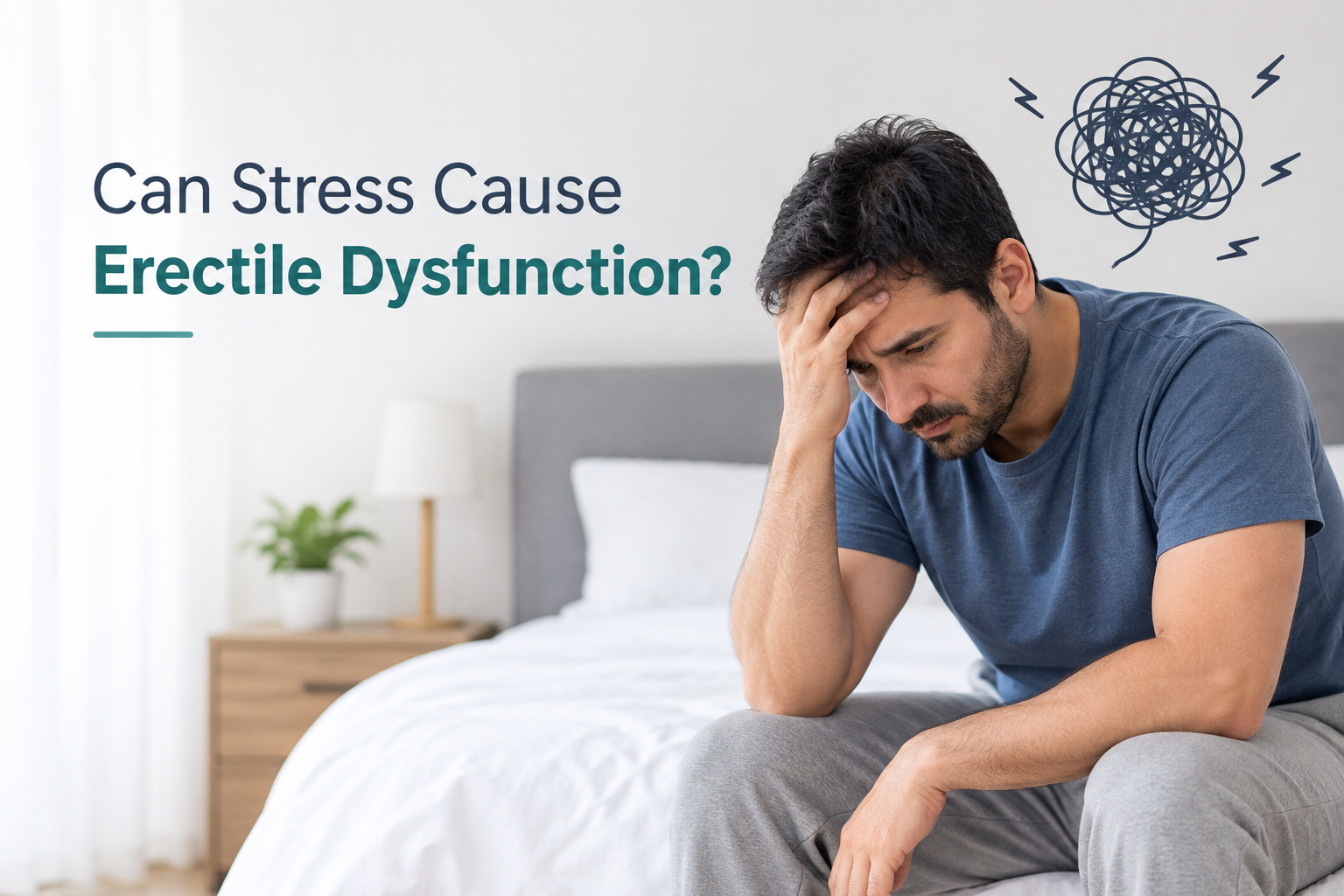
Yes, stress can contribute to erectile dysfunction (ED), especially when it becomes frequent or overwhelming. An erection depends on several things working together, including healthy blood flow, nerve signals, hormones, and sexual arousal. When your body and mind are dealing with ongoing stress, that process can become more difficult.
Thank you for reading this post, don't forget to subscribe!This does not mean that having trouble with an erection during a stressful period automatically means you have permanent erectile dysfunction. Sometimes sexual function changes temporarily when life becomes particularly demanding.
At the same time, recurring erection problems should not automatically be blamed on stress. Erectile dysfunction can also have physical, medication-related, psychological, or relationship-related causes. Understanding the bigger picture is important.
From Dr. Neha’s perspective, sexual difficulties are often easier to understand when we look at what is happening in the person’s life, not just what happens in the bedroom.
How Does Stress Cause Erectile Dysfunction?
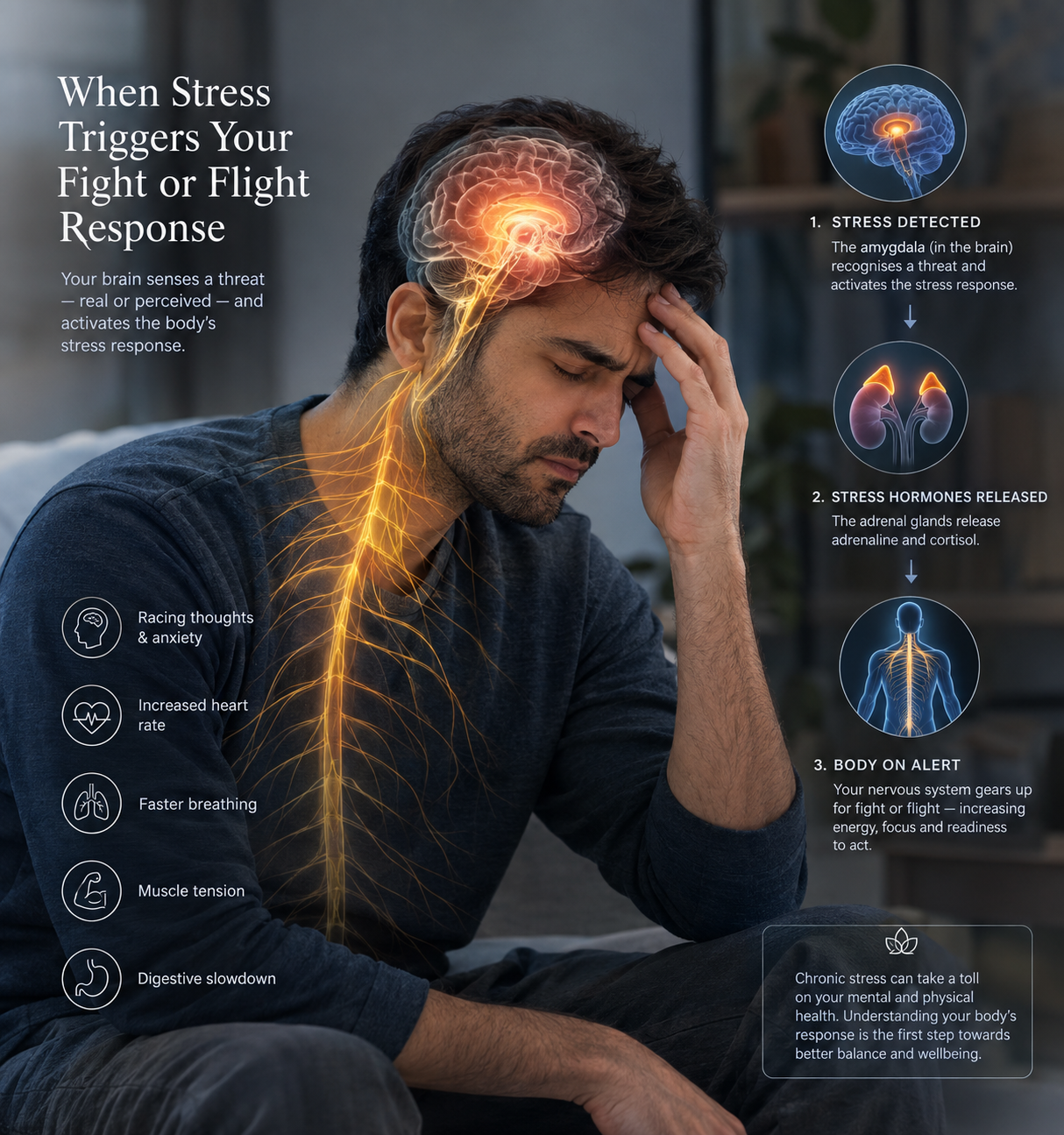
Stress does not affect erections through one single mechanism. It can influence the nervous system, hormones, sleep, mood, arousal, and confidence all of which can affect sexual function.
Stress Activates the Body’s “Fight or Flight” Response
When you feel stressed or threatened, your body shifts into a state of greater alertness. Your nervous system prepares you to deal with what it perceives as a problem.
Sexual arousal is not the body’s immediate priority in that state.
This can make it harder to relax and respond sexually, particularly when the stress is intense or continues for a long time.
Stress Hormones Can Affect Sexual Response
Stress triggers hormonal and nervous-system changes, including the release of cortisol and other stress-related chemicals.
Cortisol is a normal and useful hormone, but prolonged stress can affect several systems involved in mood, sleep, energy, and sexual wellbeing. It is therefore more accurate to think of stress as affecting the overall environment in which sexual function takes place rather than blaming one hormone for ED.
Stress Can Affect Blood Flow and Arousal
An erection requires adequate blood flow and coordinated nerve signaling.
Anxiety and stress can interfere with sexual arousal and make it harder to maintain the relaxed state needed for an erection. You may still want to have sex mentally, but your body’s response may not cooperate in the way you expect.
What Types of Stress Can Affect Erections?
Stress is not always about having too much work. Different forms of pressure can affect sexual function in different ways.
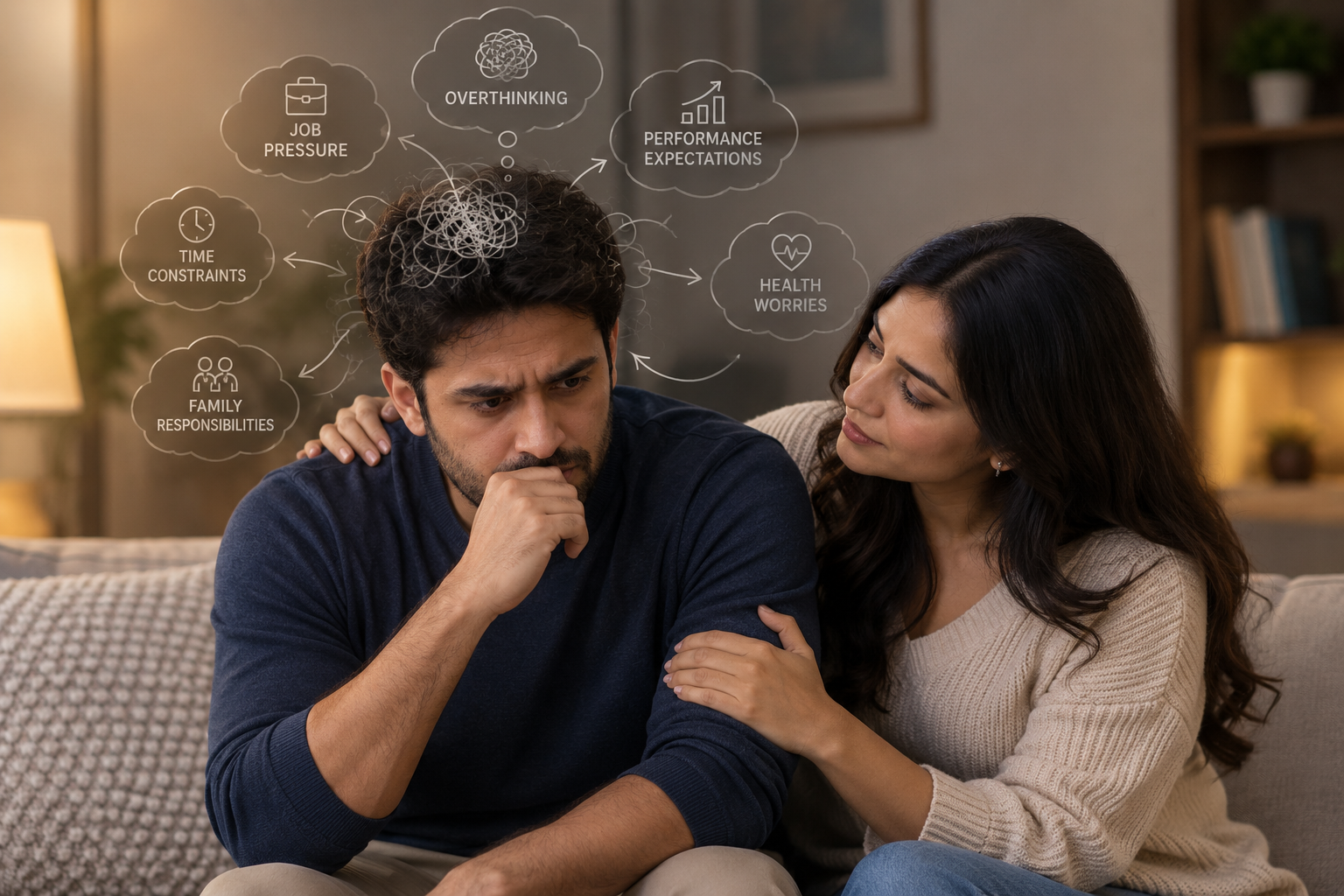
Work and Financial Stress
Deadlines, long working hours, job insecurity, business concerns, and financial worries can keep the mind constantly occupied.
Even when you are physically with your partner, your thoughts may still be somewhere else.
Relationship Stress
Conflict, emotional distance, unresolved resentment, fear of rejection, or repeated arguments can affect sexual intimacy.
When you do not feel emotionally comfortable with your partner, becoming fully relaxed and sexually present may be more difficult.
Performance Anxiety
Performance anxiety can create a particularly frustrating cycle.
You may start worrying about whether you will get an erection, whether you will keep it, or whether your partner will be disappointed.
That worry itself increases tension, which can make an erection harder to maintain.
Chronic Mental and Emotional Stress
Constant worrying and emotional exhaustion can gradually affect your interest in intimacy and your ability to relax.
When your mind rarely gets a chance to switch off, sexual desire and arousal can become less accessible.
Can Stress Cause Temporary Erectile Dysfunction?
Yes. Stress-related erection difficulties can sometimes be temporary.
For example, a man may notice that his erections are normal during masturbation or when waking up but become less reliable during partnered sex. Others may notice that their sexual function changes depending on how stressed or relaxed they feel.
A particularly stressful period can affect sexual function without causing permanent physical damage.
However, this does not mean every case of ED is “just stress.”
Possible Clues That Stress May Be Playing a Role
Stress may be contributing if:
- The erection difficulties began during a particularly stressful period.
- Erections vary considerably depending on the situation.
- Anxiety increases when you think about sexual performance.
- You still have sexual desire but struggle to maintain an erection.
- Your symptoms improve when stress or pressure decreases.
These clues can be useful, but they cannot diagnose the cause on their own.
The Stress–Performance Anxiety Cycle
One of the most frustrating patterns looks like this:
Stress → erection difficulty → worry about performance → increased anxiety → more difficulty with erections
Imagine having difficulty maintaining an erection once. The next time you have sex, you may start thinking, “What if it happens again?”
Instead of focusing on your partner or the experience, you start checking yourself: Am I still hard? Is my erection strong enough? How long will it last?
That self-monitoring can increase anxiety and take you further away from relaxation and arousal.
Breaking this cycle often means reducing pressure rather than trying harder to perform.
How Can Stress Affect Other Parts of Sexual Health?
Stress can affect more than erections.
It may contribute to:
- Lower libido
- Difficulty becoming sexually aroused
- Difficulty maintaining an erection
- Changes in ejaculation
- Reduced sexual confidence
- Less interest in intimacy
- Emotional disconnection from a partner
These issues can overlap. For example, stress may reduce desire, which creates less intimacy. Less intimacy may then create relationship tension, which adds more stress.
Recognizing these connections can help you address the underlying problem rather than treating each symptom separately.
Does Poor Sleep From Stress Make Erectile Dysfunction Worse?
It can.
Stress often interferes with sleep, and poor sleep can affect energy, mood, libido, and overall sexual function. When you are constantly tired, it is harder to feel physically and mentally ready for intimacy.
Improving your sleep is therefore an important part of supporting sexual health.
Try maintaining a consistent sleep schedule, creating a calmer bedtime routine, and reducing late-night work or stimulation where possible.
Better sleep may help, but it should not be presented as a guaranteed cure for ED. Persistent erection difficulties still deserve proper evaluation.
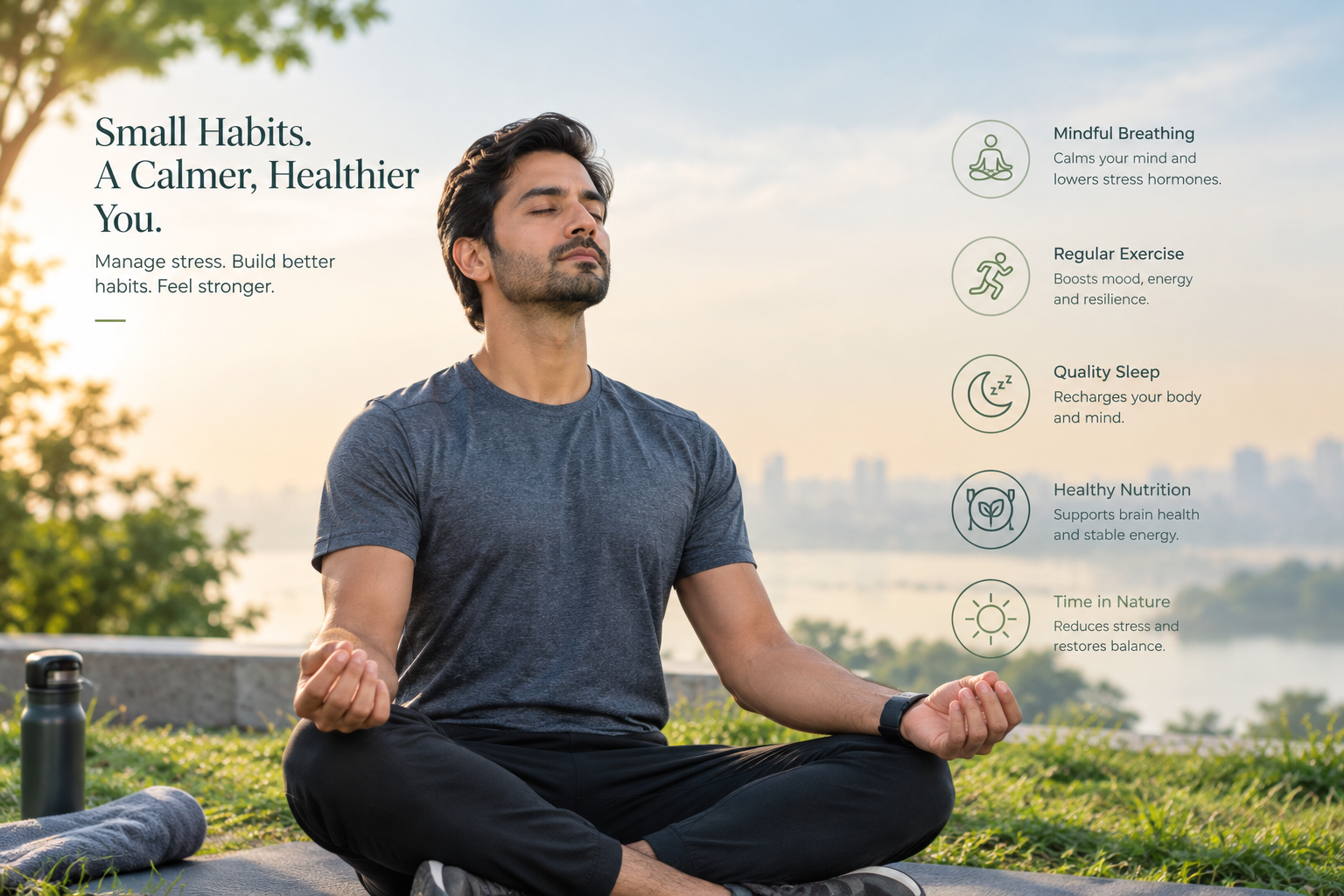
How to Reduce Stress and Improve Erectile Function
If stress appears to be contributing to your erection difficulties, start by looking at your overall routine rather than focusing only on sex.
Identify the Source of Stress
Ask yourself what has changed recently.
Is work overwhelming? Are you worried about money? Has your relationship become tense? Are you sleeping badly? Have you been feeling anxious or emotionally exhausted?
Understanding the source gives you a better starting point than simply trying to “perform better.”
Exercise Regularly
Regular physical activity supports cardiovascular health, mood, energy, and overall wellbeing.
Walking, strength training, swimming, cycling, yoga, or another activity you enjoy can be a good way to stay active without turning exercise into another source of pressure.
Improve Sleep
Aim for a reasonably consistent sleep schedule and give yourself enough time to rest.
If possible, separate work from your bedtime routine and reduce habits that keep your mind active late into the night.
Practice Relaxation and Slow Breathing
If anxiety rises before or during sex, slow breathing can help you settle your body.
Take steady breaths and consciously relax your shoulders, abdomen, and other areas where you notice tension.
The goal is not to force an erection. It is to create a calmer environment in which sexual arousal can happen naturally.
Reduce Performance Pressure
Instead of repeatedly asking yourself, “Am I staying hard?”, try bringing your attention back to sensation, connection, affection, and mutual pleasure.
Sex does not have to be measured by erection duration or penetration.
The less sex feels like an exam, the easier it may become to stay present.
Talk to Your Partner
Silence can make sexual difficulties feel much bigger.
A simple, honest conversation can help your partner understand that an erection problem is not necessarily a sign of reduced attraction.
Treating the issue as something you can work through together can reduce misunderstanding, embarrassment, and pressure.
What Should You Avoid If Stress Is Affecting Your Erections?
Try not to:
- Constantly check whether you are hard enough.
- Treat every change in erection as a failure.
- Avoid intimacy completely because you are afraid of another difficult experience.
- Use excessive alcohol to try to relax.
- Take unverified supplements or sexual-health products without guidance.
- Blame yourself or your partner.
- Assume every case of ED is psychological.
Trying to force an erection often creates more pressure. A calmer approach is usually more helpful.
When Is Erectile Dysfunction More Than Just Stress?
Stress may be involved, but persistent ED can also have physical causes.
Possible contributors include:
- Diabetes
- High blood pressure
- High cholesterol
- Cardiovascular disease
- Hormonal problems
- Certain medications
- Smoking
- Excessive alcohol use
- Obesity
- Neurological conditions
- Pelvic or prostate-related conditions
This is one reason ongoing ED should not simply be dismissed as a psychological problem.
In some cases, erectile dysfunction can be an early sign of an underlying health issue. Getting evaluated can therefore be useful even when you suspect stress is involved.
When Should You See a Doctor or Sexologist?
Consider professional evaluation if:
- Erectile difficulties happen repeatedly.
- The problem continues after a stressful period has passed.
- There has been a sudden or significant change in sexual function.
- You have low libido along with erection problems.
- You experience pelvic pain or other concerning symptoms.
- ED is affecting your confidence, relationship, or quality of life.
- You are taking medication that may affect sexual function.
A doctor or sexual-health professional can help determine whether stress, physical health, medication, relationship factors, or a combination of these is contributing to the problem.
Can Stress-Related Erectile Dysfunction Be Treated?
In many cases, stress-related ED can be managed effectively once the contributing factors are understood.
The right approach depends on the cause. For some people, lifestyle changes and stress management may be helpful. Others may benefit from psychological support, sex therapy, relationship counselling, or medical treatment.
There is no single treatment that works for every person.
The important thing is to avoid assuming that you simply need to “try harder.” If stress, anxiety, health conditions, medication, or relationship concerns are involved, addressing those factors may be more useful than focusing entirely on the erection itself.
Conclusion
So, can stress cause erectile dysfunction? Yes, it can. Stress can affect the body’s nervous-system response, sexual arousal, sleep, confidence, and ability to stay relaxed during intimacy. For some men, this can lead to temporary or recurring erection difficulties.
But ED should not automatically be dismissed as “just stress.” Physical health, medications, hormones, relationships, and mental health can all play a role. If the problem keeps happening, understanding the underlying cause is more useful than blaming yourself or repeatedly trying to force a better performance.
And struggling with an erection does not make you less masculine, less attractive, or fundamentally flawed. As Dr. Neha’s perspective emphasizes, sexual confidence grows when you understand what your body and mind are responding to and get the right support when you need it.
FAQs
1. Can stress cause erectile dysfunction?
Yes, ongoing stress can contribute to erectile dysfunction by affecting the nervous system, arousal, anxiety levels, sleep, and overall sexual wellbeing. However, persistent ED can also have physical causes and should not automatically be blamed on stress.
2. Can anxiety cause erectile dysfunction even if I am physically healthy?
Yes. Performance anxiety can interfere with the mental and physical relaxation needed for an erection, even when there is no obvious physical health problem.
3. Can work stress cause erectile dysfunction?
It can. Heavy workloads, financial concerns, mental fatigue, and stress-related sleep problems can all affect sexual desire and erectile function.
4. Can stress cause temporary erectile dysfunction?
Yes. Some men experience erection difficulties during particularly stressful periods and notice improvement when the pressure decreases. Repeated or persistent symptoms still deserve evaluation.
5. How do I know if my erectile dysfunction is caused by stress or a physical problem?
It can be difficult to determine without looking at the full picture. Your health history, medications, symptoms, stress levels, and pattern of erections may all provide useful clues, which is why professional evaluation can help.
6. Can reducing stress improve erections?
It may, particularly when stress is contributing to the problem. However, reducing stress does not guarantee that persistent ED will resolve if another physical or psychological cause is involved.
7. When should I see a doctor for erectile dysfunction?
See a doctor when erection problems happen repeatedly, persist over time, appear suddenly, cause significant distress, or occur alongside symptoms such as low libido, pain, or other health concerns.