It usually starts with curiosity, quiet, unspoken, and shaped by things you’ve heard rather than things you actually know. And at the center of it all are persistent myths about sex toys that influence how people think about pleasure, relationships, and even their own bodies.
The reality is that sex toys today are widely used as part of modern sexual wellness. They’re not niche, not rare, and certainly not as controversial as outdated narratives make them seem.
Yet misinformation continues to shape decisions from avoiding products that could improve intimacy to unknowingly choosing options that compromise sex toy safety.
Understanding what’s true and what isn’t matters more than people realize. It affects not just comfort and confidence, but also physical health and relationship dynamics.
Myth 1: Sex Toys Are Only for People Without Partners

This is one of the most common and misleading myths about sex toys. The assumption is simple: if someone is using a toy, something must be missing in their relationship.
In reality, the opposite is often true. Many couples use intimacy tools like vibrators or couples’ devices to enhance their connection, not replace it. Research consistently shows that partners who explore sexual wellness together tend to report better communication, increased satisfaction, and deeper emotional connection.
A sex toy doesn’t compete with a partner, it complements the experience. Think of it as an addition, not a substitute. Healthy relationships aren’t defined by exclusivity of methods, but by openness, communication, and mutual comfort.
Myth 2: Sex Toys Are Addictive and Ruin Natural Sensation
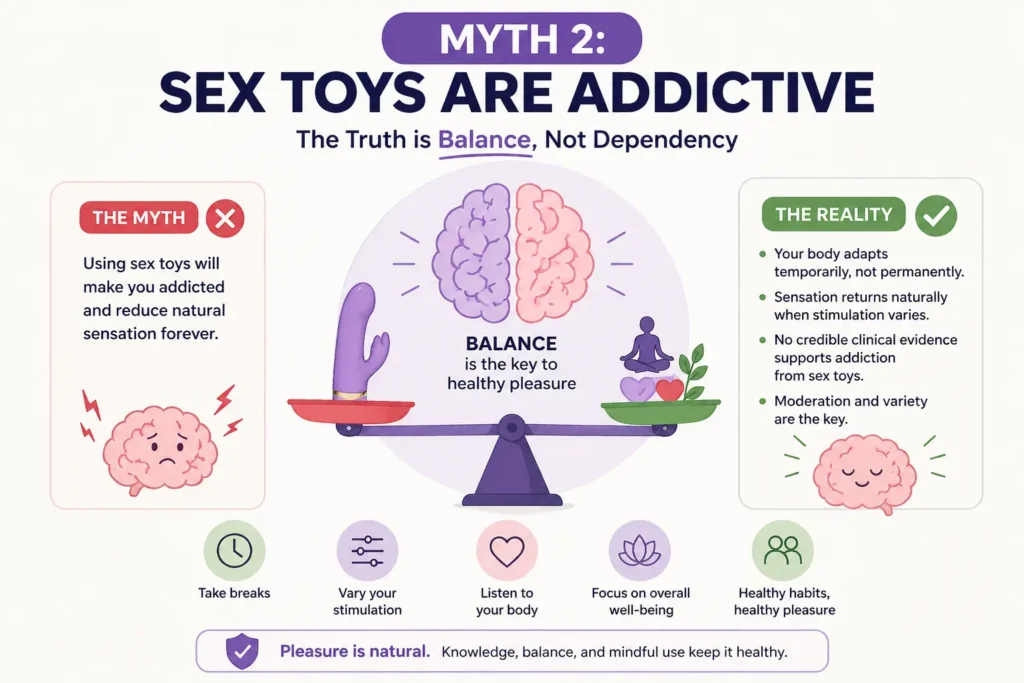
Another widely believed concern especially around vibrator myths is that using sex toys will permanently reduce sensitivity or create dependency.
Here’s what actually happens: the body can temporarily adapt to a specific type of stimulation, especially if it’s intense and repetitive. But this adaptation is not permanent. Sensation returns naturally when stimulation varies or pauses.
There’s no credible clinical evidence supporting long-term damage or “addiction” caused by sex toys. The human body is adaptable, not fragile. The key is balance just like with any form of stimulation.
Myth 3: All Sex Toys Are Body-Safe
This is where misinformation becomes risky. Not all products meet basic standards of sex toy safety, and assuming they do can lead to irritation, infections, or long-term health concerns.
Understanding body-safe materials is essential:
- Safe options: medical-grade silicone, stainless steel, borosilicate glass, ABS plastic
- Unsafe materials: jelly rubber, PVC, low-quality latex, chemically-smelling plastics
- Porous vs non-porous: non-porous materials are safer because they don’t trap bacteria
- Price matters: extremely cheap products often compromise safety standards
The industry isn’t strictly regulated, which means the responsibility falls on the user. Choosing the right material isn’t a luxury, it’s a health decision.
Myth 4: Sex Toys Are Shameful or Taboo
The stigma around sex toys still exists, even though attitudes are slowly changing. This myth is rooted less in reality and more in cultural discomfort around pleasure.
Sexual health is part of overall wellbeing. Exploring pleasure, understanding your body, and using tools that enhance comfort or satisfaction all fall under sexual wellness not something to feel embarrassed about.
In fact, masturbation and self-exploration have documented benefits:
- Reduced stress
- Better sleep
- Improved body awareness
- Relief from tension and discomfort
The idea that sex toys are “shameful” says more about outdated societal narratives than about the tools themselves.
Myth 5: Sex Toys Are Only for Women

Another limiting belief is that sex toys are designed only for women. This is simply outdated.
Today, the market includes a wide range of intimacy tools designed for all genders:
- Male vibrators
- Masturbation sleeves
- Prostate massagers
- Couples’ devices
The idea that pleasure products are gender-specific ignores how diverse human experiences are. Everyone deserves access to tools that support their comfort, curiosity, and wellbeing.
The Bigger Picture
Misunderstanding myths about sex toys doesn’t just create confusion it shapes behavior. People either avoid something that could enhance their lives or make unsafe choices due to lack of awareness.
When people understand:
- what materials are safe
- how their body actually responds
- and how these tools fit into relationships
they make better decisions not just for pleasure, but for health and confidence as well.
Conclusion
The truth about myths about sex toys is simple: most of them exist because people don’t talk openly about sexual wellness. Silence creates assumptions, and assumptions turn into beliefs that stick even when they’re wrong.
Sex toys are not replacements, not harmful when used correctly, and not something limited to a specific type of person. They are simply tools that can enhance intimacy, improve self-awareness, and support overall wellbeing when chosen and used responsibly.
Understanding sex toy safety, choosing body-safe materials and letting go of outdated stigma allows people to approach the subject with clarity instead of hesitation. And that shift matters. Because when decisions are based on facts instead of myths, the experience becomes safer, healthier, and far more empowering.
At the end of the day, sexual wellness is personal. But it should never be misinformed. The more clearly we understand it, the better choices we make for ourselves and for our relationships.
FAQs
Can sex toys damage natural sexual response?
Temporary adaptation can happen with repeated intense use, but it’s completely reversible. Varying stimulation prevents any long-term effect.
How do I know if a sex toy is body-safe?
Look for body-safe materials like medical-grade silicone, glass, or stainless steel. Avoid products with strong chemical smells or unclear material labeling.
Are sex toys good for relationships?
Yes. Many couples report improved communication and satisfaction when using intimacy tools together.
Is masturbation with sex toys healthy?
Yes. It supports sexual wellness and offers benefits like stress relief, better sleep, and improved body awareness.
Are sex toys only for women?
No. There is a wide range of products designed for all genders, making pleasure accessible to everyone.