
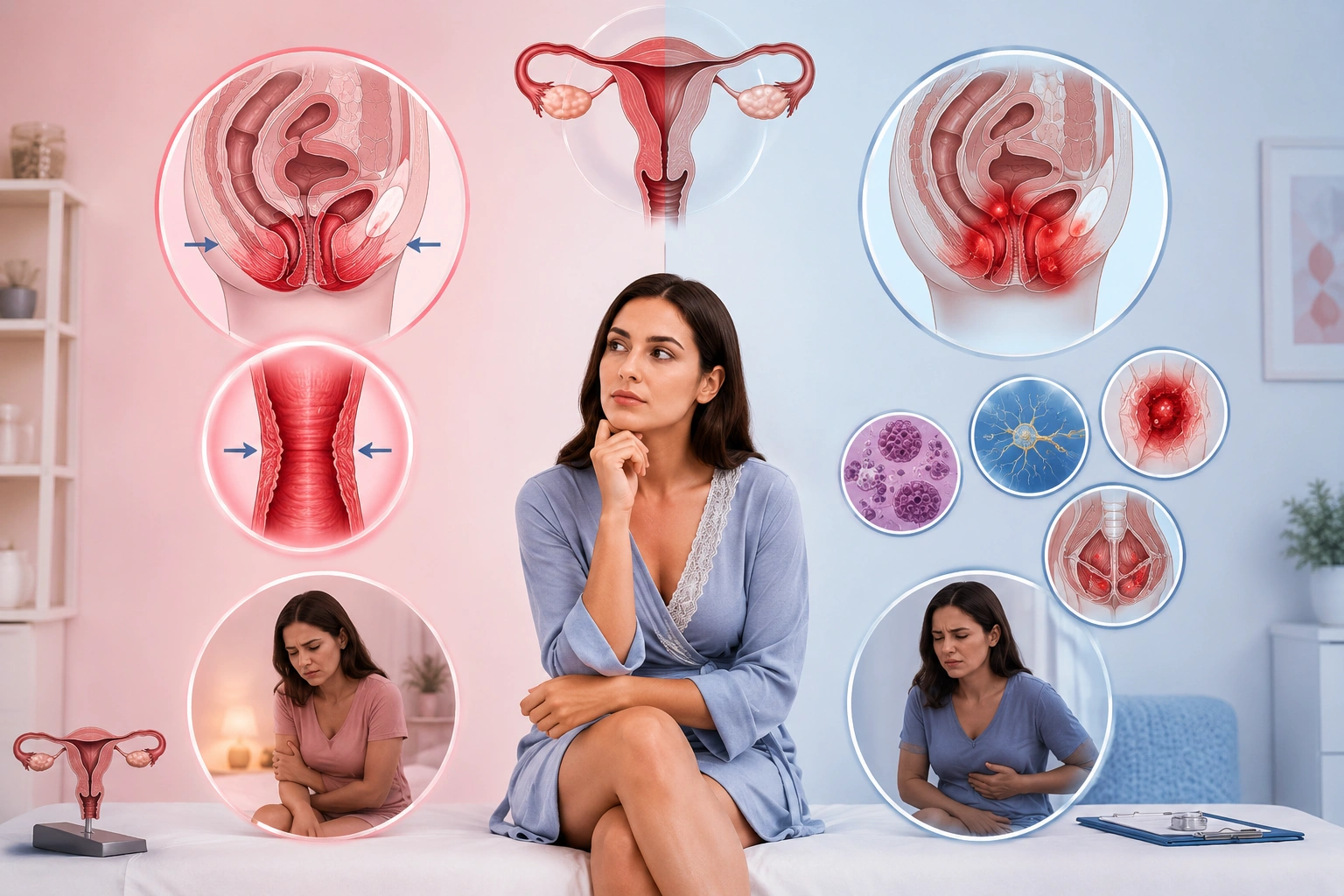
Pain during sex is something many women experience at some point in their lives, yet it’s still a topic that’s often surrounded by silence and confusion.
Thank you for reading this post, don't forget to subscribe!Knowing the difference between vaginismus and dyspareunia is important because the cause of the pain determines whether you need vaginismus treatment or dyspareunia treatment.
While both conditions can make intimacy uncomfortable and affect confidence, relationships, and emotional well-being, they don’t occur for the same reasons.
Understanding the differences can help you recognize symptoms earlier and find the right support.
Vaginismus vs Dyspareunia: Quick Comparison
| Feature | Vaginismus | Dyspareunia |
| Definition | Involuntary tightening of the pelvic floor muscles that makes penetration painful or difficult. | Persistent or recurring pain during or after sexual intercourse. |
| Main Problem | Muscle spasm prevents comfortable penetration. | Pain caused by various physical or psychological factors. |
| Pain Location | Usually at the vaginal opening. | At the vaginal opening, deeper inside the pelvis, or both. |
| Muscle Tightening | Yes, involuntary. | May or may not be present. |
| Common Causes | Anxiety, fear of pain, pelvic floor dysfunction, trauma. | Infections, vaginal dryness, hormonal changes, endometriosis, pelvic disorders, emotional factors. |
| Treatment | Pelvic floor therapy, counseling, relaxation techniques, vaginal dilators. | Depends on the underlying cause and may include medication, therapy, lubricants, or hormonal treatment. |
Key Differences Between Vaginismus and Dyspareunia
1. Nature of the Condition
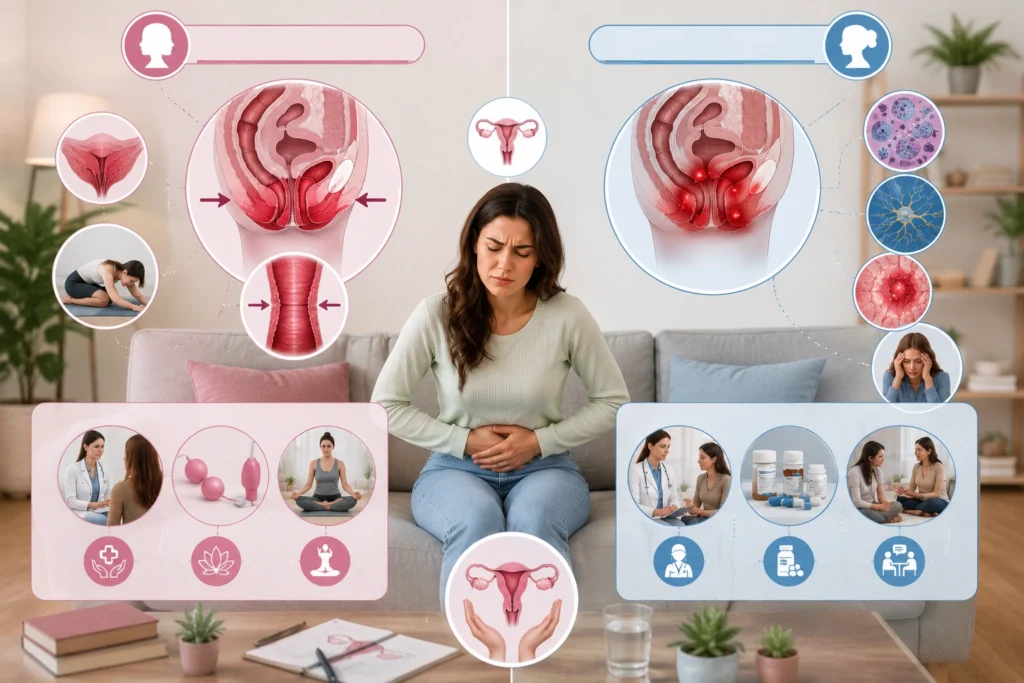
Vaginismus is a condition in which the muscles around the vaginal opening tighten automatically whenever penetration is attempted. This muscle response isn’t something a woman can consciously control, and it can happen even when she wants penetration to occur.
Dyspareunia isn’t a muscle disorder. Instead, it’s a symptom that describes pain during or after sexual intercourse.
2. Type of Pain Experienced
Women with vaginismus often describe a feeling of tightness, burning, or the sensation that they’re “hitting a wall” during penetration. The discomfort is directly related to the involuntary muscle tightening.
Dyspareunia can feel quite different depending on its cause. Some women experience sharp or stabbing pain, while others describe aching, burning, or deep pelvic discomfort. In some cases, the pain continues even after intercourse has ended.
3. When the Pain Occurs
With vaginismus, pain usually begins as soon as penetration is attempted. This may happen during sexual intercourse, tampon insertion, or even a routine pelvic examination.
Dyspareunia doesn’t follow one fixed pattern. The pain may occur at the beginning of intercourse, during deep penetration, or after sexual activity. The timing often depends on the underlying medical condition causing the discomfort.
4. Muscle Involvement
In vaginismus, the pelvic floor muscles contract automatically as a protective response. This involuntary tightening can make penetration extremely painful or impossible.
With dyspareunia, muscle spasms aren’t the defining feature. Although some women may develop muscle tension because they expect pain, the discomfort usually comes from another underlying condition rather than the muscles themselves.
5. Common Causes
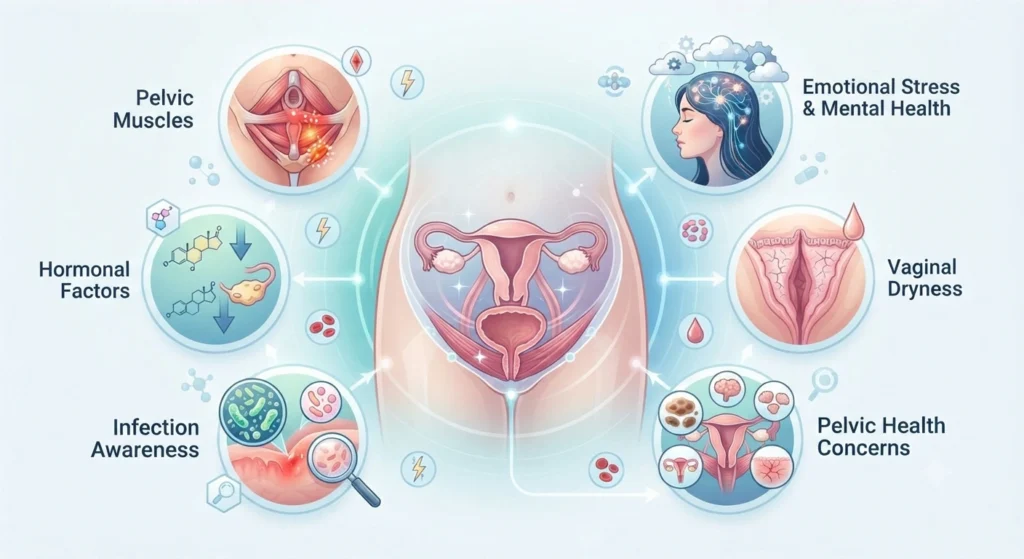
The causes behind vaginismus and dyspareunia are quite different.
Vaginismus is commonly linked to:
- Fear of painful intercourse
- Anxiety about intimacy
- Previous traumatic experiences
- Pelvic floor dysfunction
- Sometimes, no identifiable cause
Dyspareunia has a wider range of possible causes, including:
- Vaginal infections
- Vaginal dryness
- Menopause-related hormonal changes
- Endometriosis
- Pelvic inflammatory disease
- Childbirth injuries
- Surgical scars
- Certain skin conditions
- Emotional or relationship-related concerns
Because dyspareunia has many possible causes, identifying the exact reason often requires a medical evaluation.
6. Emotional and Psychological Impact
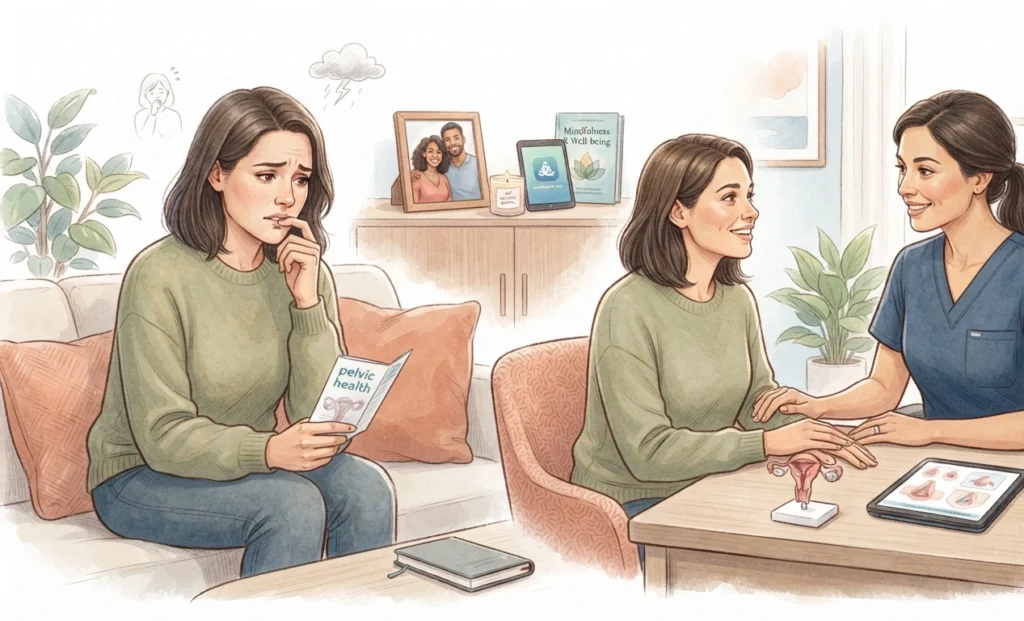
Women with vaginismus may begin to fear penetration because they expect pain or believe intercourse won’t be possible. This anxiety can make the muscle tightening even more pronounced, creating a cycle that’s difficult to break without treatment. Dyspareunia can also lead to stress, frustration, and reduced sexual confidence.
7. Diagnosis
Getting the right diagnosis is essential because vaginismus and dyspareunia are treated differently. A healthcare provider will usually begin by asking about your symptoms, medical history, and when the pain occurs.
A gentle pelvic examination may be recommended, but it should always be performed at your comfort level. In cases of vaginismus, the involuntary tightening of the pelvic floor muscles is often noticeable during an attempted examination. For dyspareunia, the doctor may look for signs of infection, hormonal changes, pelvic disorders, or other physical conditions that could be causing the pain.
Read more: Dyspareunia Treatment in Gurugram
Can Both Conditions Occur Together?
Yes, it’s possible to experience both conditions at the same time.
For example, a woman may initially develop dyspareunia because of vaginal dryness, an infection, or another medical condition. After repeatedly experiencing pain, she may begin to anticipate discomfort whenever penetration is attempted. This fear can trigger involuntary tightening of the pelvic floor muscles, leading to vaginismus.
Similarly, someone with vaginismus may experience pain caused by repeated muscle spasms during attempts at penetration, which can also be classified as dyspareunia.
Similarities Between Vaginismus and Dyspareunia
Both conditions can make sexual activity painful and may affect confidence, emotional well-being, and intimate relationships. They can lead to anxiety around sex, avoidance of intimacy, and feelings of frustration or isolation if left untreated.
Some of the key similarities include:
- Both can cause pain during sexual activity.
- Both may interfere with intimacy and relationships.
- Emotional factors such as stress or anxiety can influence symptoms.
- Both benefit from early diagnosis and proper treatment.
- Pelvic floor physical therapy may be helpful in some cases.
- Both conditions are treatable with the right medical guidance.
The most important thing to remember is that pain during intercourse should never be considered “normal.” Seeking professional help early can improve both physical comfort and overall quality of life.
Read more: Vaginismus Treatment in Gurugram
Conclusion
Understanding the vaginismus and dyspareunia is the first step toward getting the right diagnosis and treatment. While both conditions can cause pain during intimacy, they have different underlying mechanisms. The good news is that both conditions are treatable. Whether the cause is physical, emotional, or a combination of both, early medical evaluation can help identify the problem and guide the most appropriate treatment.
FAQs
1. Is vaginismus the same as dyspareunia?
No, the main difference between vaginismus and dyspareunia is that vaginismus involves involuntary tightening of the pelvic floor muscles, while dyspareunia is a general term for persistent or recurring pain during or after sexual intercourse.
2. Can vaginismus cause dyspareunia?
Yes, the muscle tightening associated with vaginismus can make penetration painful, meaning some women with vaginismus also experience dyspareunia. However, dyspareunia has many other possible causes besides vaginismus.
3. Can dyspareunia develop into vaginismus?
In some cases, yes. Repeated painful experiences during intercourse may cause fear or anxiety about penetration. Over time, this can trigger involuntary pelvic floor muscle tightening, leading to vaginismus.
4. Is painful intercourse always vaginismus?
No, pain during intercourse can result from many different conditions, including infections, vaginal dryness, hormonal changes, endometriosis, pelvic disorders, or skin conditions. A proper medical evaluation is necessary to determine the exact cause.
5. Can both conditions occur at the same time?
Yes, some women experience both vaginismus and dyspareunia together. That’s why healthcare providers evaluate both muscle function and possible underlying medical conditions before recommending treatment.
6. Which condition is more common?
Dyspareunia is generally more common because it’s a broad term that includes pain caused by many different medical conditions. Vaginismus is less common but can have a significant impact on physical and emotional well-being if left untreated.