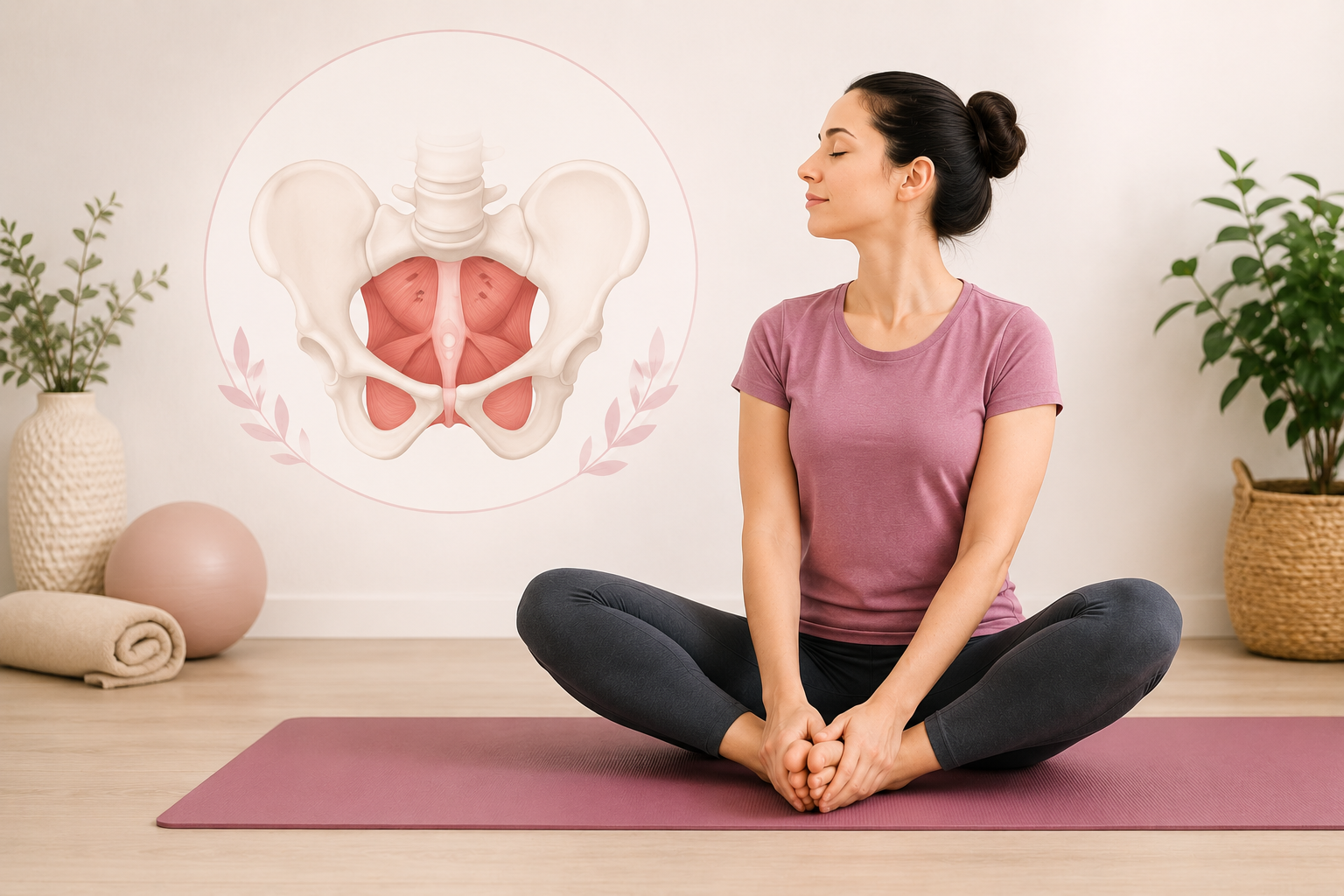
Vaginismus is a condition in which the muscles around the vaginal opening tighten involuntarily and make penetration painful. It can happen during sexual intercourse, or even a routine pelvic examination.
Thank you for reading this post, don't forget to subscribe!The good news is that vaginismus treatment is highly effective, and many people see significant improvement with the right exercises and techniques.
One of the most effective non-surgical approaches is learning how to relax the pelvic floor muscles through gentle exercises and breathing techniques.
When combined with pelvic floor counseling, these exercises can become an important part of recovery. So let’s check out these exercises and start the recovery process.
Can Pelvic Floor Exercises Help with Vaginismus?
Yes, pelvic floor exercises can be very helpful for people with vaginismus, but it’s important to understand that the focus is usually on relaxation rather than strengthening.
Many people associate pelvic floor exercises with Kegels, which involve tightening the pelvic muscles. While Kegels are useful for certain conditions, they are not always the best starting point for vaginismus because the pelvic floor muscles are already overly tense.
Instead,
Sometimes treatment begins with breathing exercises, gentle stretching, reverse Kegels, and relaxation techniques. These exercises help improve body awareness, reduce muscle guarding, and decrease fear.
Results don’t happen overnight, but practicing consistently for a few minutes each day can gradually improve muscle coordination, reduce pain, and increase confidence during intimacy.
7 Pelvic Floor Exercises for Vaginismus
1. Diaphragmatic (Deep Belly) Breathing
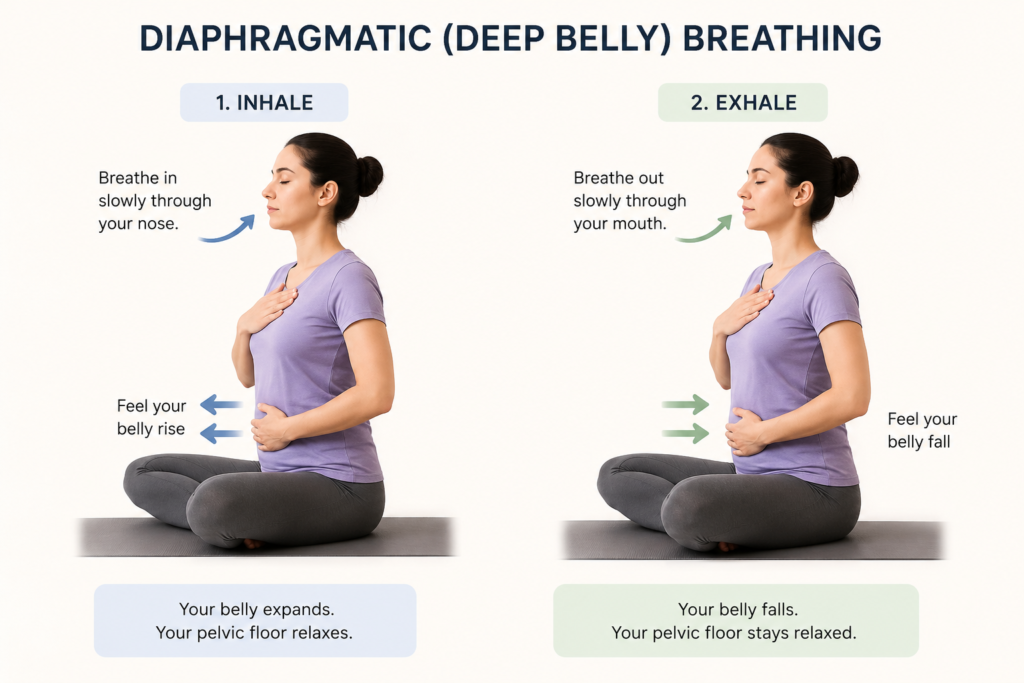
Deep belly breathing helps relax the pelvic floor muscles and reduces muscle tension. Lie comfortably on your back or sit in a relaxed position. Place one hand on your chest and the other on your abdomen. Breathe in slowly through your nose so your belly rises, then exhale gently through your mouth. Practice for 5–10 minutes daily.
2. Pelvic Floor Relaxation (Reverse Kegels)
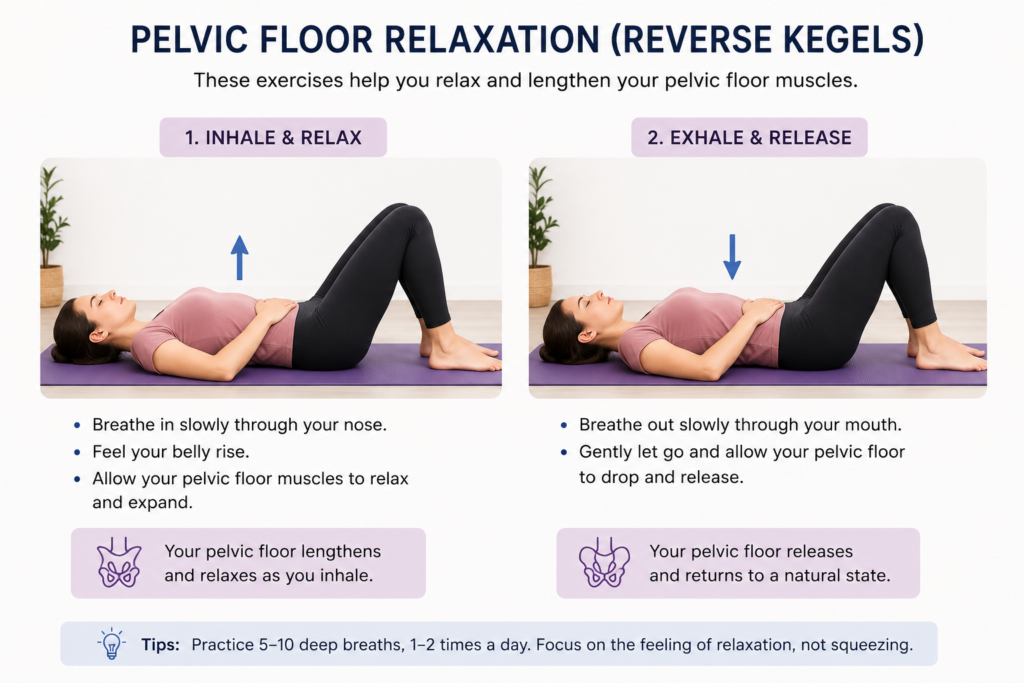
Reverse Kegels teach the pelvic floor muscles to relax instead of tighten. Take a slow breath in and imagine your pelvic floor gently dropping or opening. As you exhale, keep the muscles relaxed rather than squeezing them. Practice for a few minutes each day to improve muscle awareness.
3. Child’s Pose Stretch
Child’s Pose gently stretches the hips, lower back, and pelvic area. Kneel on the floor, sit back onto your heels, and stretch your arms forward while lowering your chest. Hold the position for 30–60 seconds and breathe slowly to encourage your pelvic floor muscles to relax.
4. Happy Baby Pose
Lie on your back, bend your knees toward your chest, and hold the outside of your feet or ankles. Keep your knees apart and breathe deeply while holding the stretch for 30–60 seconds. This pose helps open the hips and reduce pelvic floor tension.
5. Butterfly Stretch
Sit on the floor with the soles of your feet together and let your knees fall outward. Hold your feet and keep your back straight while breathing slowly. Hold the stretch for 30–60 seconds without forcing your knees toward the floor.
6. Pelvic Tilts
Lie on your back with your knees bent and feet flat on the floor. Gently tilt your pelvis to press your lower back into the floor, then return to the starting position. Repeat 10–15 times with slow, controlled movements to improve pelvic mobility and muscle awareness.
7. Deep Squat Stretch
Stand with your feet slightly wider than shoulder-width apart and lower yourself into a comfortable squat. Keep your chest upright and breathe deeply while holding the position for 20–30 seconds. Use support if needed and avoid forcing the stretch.
Common Mistakes to Avoid While Doing Pelvic Floor Exercises
Pelvic floor exercises can be highly effective for vaginismus, but only when they’re performed correctly. Some common mistakes may slow your progress or even increase discomfort.
1. Holding Your Breath
Many people unknowingly hold their breath while stretching or practicing pelvic floor exercises. This creates additional muscle tension throughout the body.
2. Focusing Only on Kegel Exercises
One of the biggest misconceptions is that stronger pelvic floor muscles automatically solve vaginismus. In reality, the muscles are often already too tight.
3. Rushing the Exercises
Recovery takes time. Trying to force a deeper stretch or expecting immediate results may increase discomfort and frustration.
4. Ignoring Pain
These exercises should never cause sharp or severe pain. Mild stretching sensations are normal, but pain is a signal to stop and reassess your technique.
5. Being Inconsistent
Doing the exercises once a week is unlikely to produce noticeable improvement. Short daily sessions of 10 to 15 minutes are generally more effective than long, infrequent workouts.
Benefits of Pelvic Floor Exercises for Vaginismus
When practiced regularly and correctly, pelvic floor exercises can play an important role in managing vaginismus. They not only help reduce physical discomfort but also improve confidence and overall pelvic health. Some of the key benefits include:
- Help relax overactive pelvic floor muscles: Gentle breathing techniques, reverse Kegels, and stretches teach the pelvic floor muscles to release tension instead of remaining in a constant state of contraction.
- Reduce pain during penetration: As the muscles become more relaxed and flexible, penetration during intercourse, tampon insertion, or pelvic examinations often becomes more comfortable.
- Improve body awareness: These exercises help you recognize when you’re unconsciously tightening your pelvic floor muscles, making it easier to relax them when needed.
- Lower anxiety around intimacy: Regular practice promotes relaxation, reduces fear associated with penetration, and helps break the cycle of pain and anxiety.
- Support other treatment methods: Pelvic floor exercises complement treatments such as pelvic floor physical therapy, vaginal dilator therapy, counseling, and medical management, often improving overall treatment outcomes.
- Increase pelvic flexibility and muscle coordination: Gentle stretching improves mobility in the hips and pelvic region, allowing the muscles to move more naturally and comfortably.
- Boost confidence and quality of life: As pain decreases and muscle control improves, many people feel more confident during intimacy and experience less stress related to sexual activity.
- Promote long-term pelvic health: Regular practice supports healthy muscle function, posture, circulation, and overall pelvic well-being, which can benefit daily activities as well as intimate health.
Read more: Vaginismus Treatment in Gurugram
Conclusion
Pelvic floor exercises are one of the most effective non-surgical ways to manage vaginismus when they’re performed correctly and consistently. The goal isn’t simply to strengthen the muscles but to teach them how to relax, lengthen, and respond without fear or excessive tension. Over time, this can help reduce pain, improve muscle control, and make intimacy feel more comfortable.
It’s important to remember that recovery is rarely a straight line. Some days will feel easier than others, and that’s completely normal. Progress often comes from small, consistent steps rather than dramatic changes overnight. Practicing these exercises for just a few minutes each day can gradually improve both physical comfort and confidence.
FAQs
1. Can pelvic floor exercises cure vaginismus?
Pelvic floor exercises alone do not cure vaginismus, but they are an important part of treatment for many people. They help relax tight pelvic muscles, improve body awareness, and reduce pain over time.
2. Are Kegel exercises good for vaginismus?
Traditional Kegel exercises focus on tightening the pelvic floor muscles, so they are not usually the first recommendation for vaginismus. Since these muscles are often already overly tense, learning to relax them through reverse Kegels and breathing exercises is generally more beneficial in the early stages of recovery.
3. What is the difference between Kegels and Reverse Kegels?
Kegels involve contracting and strengthening the pelvic floor muscles. Reverse Kegels do the opposite they encourage the muscles to relax and lengthen. For people with vaginismus, reverse Kegels are often more helpful because the goal is to reduce involuntary muscle tightness rather than increase muscle strength.
4. How long does it take to see improvement?
Everyone’s recovery is different. Some people notice small improvements within a few weeks of practicing consistently, while others may need several months. Progress depends on factors such as the severity of symptoms, the underlying cause, and whether exercises are combined with professional treatment.
5. Should pelvic floor exercises be painful?
No. Pelvic floor exercises should never cause sharp or severe pain. Gentle stretching or mild muscle awareness is normal, but pain is a sign to stop and check your technique. If exercises continue to cause discomfort, consult a healthcare professional.
6. Can I do these exercises at home?
Yes. Most pelvic floor relaxation exercises and stretches can be performed safely at home. However, if your symptoms are severe or you’re unsure whether you’re doing the exercises correctly, it’s a good idea to seek guidance from a qualified pelvic floor physiotherapist.