
Your pelvic floor is easy to forget about until something goes wrong. A little urine leakage when you sneeze, difficulty controlling gas, pelvic discomfort, or changes in sexual function can all bring these muscles suddenly into focus.
The pelvic floor is a group of muscles at the bottom of the pelvis. Everyone has one, regardless of sex. These muscles help support the bladder, bowel and reproductive organs, while also contributing to bladder and bowel control, sexual function and pelvic stability.
Like other muscles, the pelvic floor can become weak. But weakness is not the only problem. Some people have pelvic floor muscles that are overly tight, constantly contracted or poorly coordinated. In those situations, doing more and more Kegels may not actually solve the problem.
That is why the pelvic floor exercises are not simply a list of exercises to squeeze repeatedly. Effective pelvic floor training involves learning how to contract, relax, coordinate and use these muscles appropriately during everyday movement.
If you have persistent pelvic pain, urinary or bowel problems, or sexual difficulties, exercises may be only one part of the answer. A pelvic health professional can help determine what is actually happening before you start adding more repetitions.
What Are the Pelvic Floor Muscles?
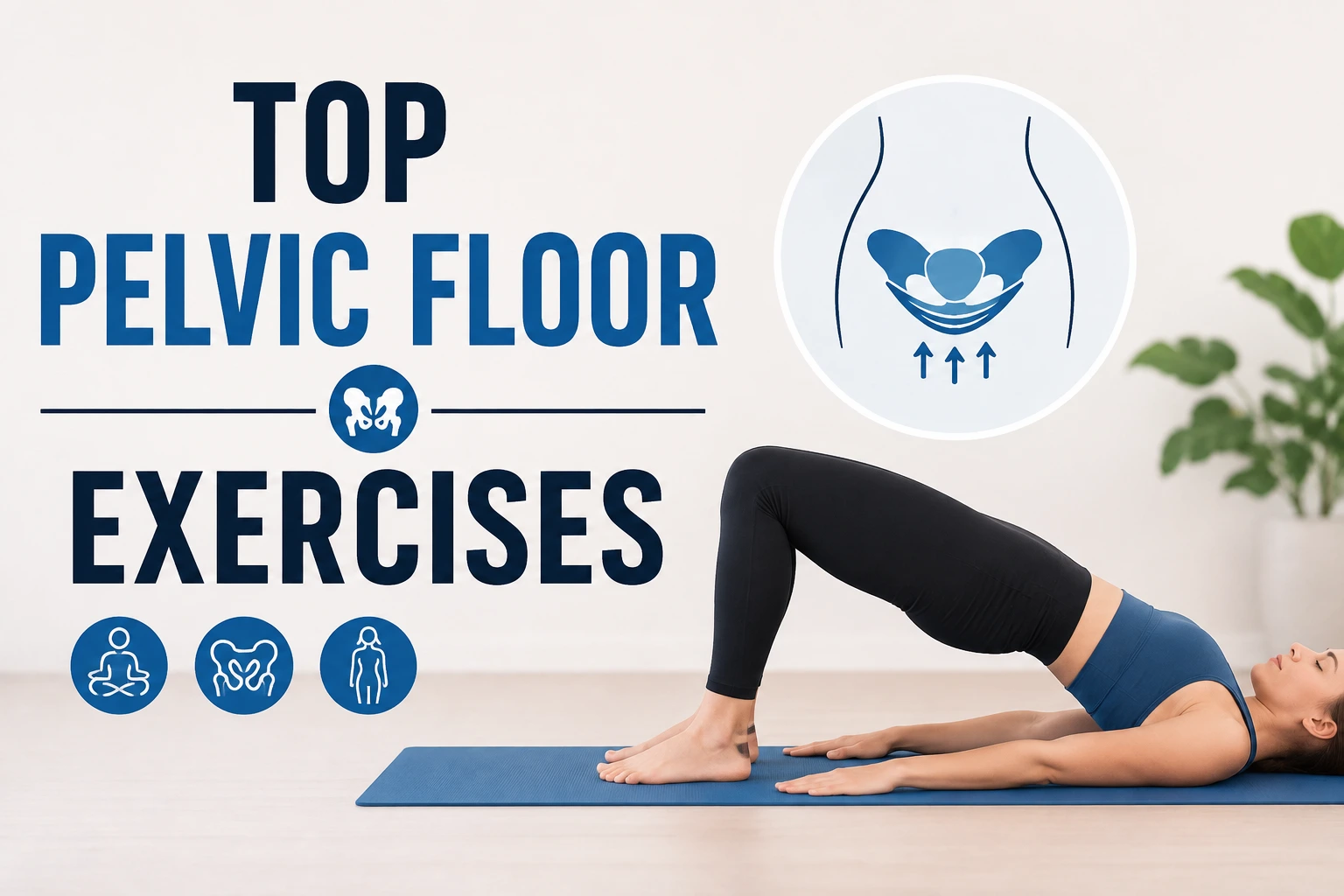
The pelvic floor is a layer of muscles and connective tissue stretching across the bottom of the pelvis. Think of it as a supportive hammock that helps hold the pelvic organs in place.
These muscles work throughout the day, often without you consciously noticing them.
They help you:
- Control urine and bowel movements
- Prevent unwanted leakage
- Support the pelvic organs
- Stabilise the pelvis and trunk during movement
- Contribute to sexual function
- Contract and relax in response to changes in pressure and movement
The pelvic floor does not simply stay switched on or off. It needs to respond to what your body is doing.
For example, the muscles may contract when you cough, sneeze or lift something heavy. They also need to relax when you urinate or have a bowel movement.
This distinction between strength and relaxation is important.
A weak pelvic floor may struggle to provide enough support or control. On the other hand, an overactive pelvic floor may remain tense when it should relax, sometimes contributing to pain, urinary symptoms or discomfort during sex.
So, healthy pelvic floor function is really about strength, flexibility, awareness and coordination rather than strength alone.
Why Are Pelvic Floor Exercises Important?
Pelvic floor muscle exercises can help improve your awareness of these muscles and, when appropriate, develop their strength and control.
They may be useful for:
- Supporting bladder control
- Supporting bowel control
- Improving pelvic muscle coordination
- Developing better awareness of pelvic tension
- Supporting aspects of sexual function
- Improving coordination between breathing, the abdominal muscles and pelvic floor
- Supporting recovery from certain pelvic health problems when recommended by a healthcare professional
But pelvic floor exercises are not a universal treatment for every pelvic health concern.
For example, someone with genuine pelvic floor weakness may benefit from strengthening. Someone with significant pelvic muscle tension may need to focus more on relaxation. Another person may have poor coordination rather than either weakness or excessive tightness.
That is why pelvic floor muscle training should be individualised when symptoms are persistent or complex.
How to Identify Your Pelvic Floor Muscles
Before you start Kegel exercises, you need to know what you are actually contracting.
One way to recognise the muscles is to think about the muscles you would use to prevent yourself from passing gas. You can also briefly notice the muscles involved in stopping urine flow.
However, do not turn stopping your urine stream into a daily workout.
Trying it once or twice can help you understand which muscles are involved, but regularly interrupting urination may interfere with normal bladder emptying.
When you contract the pelvic floor correctly, you may feel a gentle lifting or tightening sensation around the pelvic area.
At the same time, try to keep your:
- Abdomen relaxed
- Buttocks relaxed
- Thighs relaxed
- Shoulders relaxed
- Breathing normal
You should not need to squeeze your entire body to perform a pelvic floor contraction.
If you cannot tell whether you are using the right muscles, or you can contract them but cannot seem to relax them, a pelvic floor physiotherapist or other qualified specialist can assess your technique.
Top Pelvic Floor Exercises
There is no single exercise that is best for everyone. A good pelvic floor routine can include several types of movements, depending on your needs.
1. Basic Kegel Exercise
The basic Kegel is the starting point for many people.
Sit or lie down somewhere comfortable. Once you have identified your pelvic floor muscles, gently contract them as if you are trying to prevent passing gas.
Hold the contraction for a few seconds, then release completely.
Start with around 8–10 repetitions rather than trying to squeeze as hard or as long as possible.
The pattern should feel something like:
Gently contract → hold → fully release → rest.
The release matters.
If you finish one repetition and immediately tense the muscles again, you are missing an important part of the exercise.
2. Slow Pelvic Floor Contractions
Slow contractions help you practise holding the pelvic floor gently for longer periods.
Begin with a comfortable contraction and hold it for a few seconds. As your control improves, you can gradually increase the duration.
Do not force yourself to hold for a specific number of seconds if your muscles start shaking or other muscles begin taking over.
After every contraction, allow the pelvic floor to relax fully.
This type of exercise can help develop endurance and control, but the goal is not to keep the muscles permanently switched on.
A good repetition has two equally important phases:
Contraction and relaxation.
3. Quick Pelvic Floor Contractions
Quick contractions are shorter than slow Kegels.
Gently contract the pelvic floor and release it shortly afterwards. Then repeat.
For example:
Contract → release → pause → contract → release.
These exercises can help you practise the muscles’ ability to respond quickly.
But quick does not mean frantic.
If you start squeezing as rapidly as possible and lose control of the contraction or relaxation, slow down. A smaller, controlled movement is more useful than a rushed one.
4. Pelvic Floor Relaxation Exercise
This is the exercise many people skip.
Pelvic floor training is often associated with squeezing, but learning to let the muscles go is equally important.
Sit or lie down comfortably. Take a slow breath and allow your abdomen and pelvic area to soften.
Imagine the pelvic floor gently dropping or releasing rather than pulling upward.
Do not push down forcefully. You are simply trying to recognise what relaxation feels like.
This may be particularly relevant if you experience pelvic pain, pain during sex or a persistent feeling of tightness.
This may be particularly relevant if you experience pelvic pain, pain during sex or a persistent feeling of tightness. You can also learn more about pelvic floor exercises for vaginismus when pelvic muscle tension is contributing to symptoms.
5. Pelvic Floor Exercises With Deep Breathing
Your breathing and pelvic floor naturally work together.
Try lying down comfortably and taking slow, relaxed breaths.
As you inhale, allow your abdomen and pelvic floor to soften. As you exhale, you can gently engage the pelvic floor if appropriate.
The contraction should be light and controlled. You should still be able to breathe normally.
This exercise is less about building maximum strength and more about improving body awareness and coordination.
Over time, you may become better at noticing when you are unintentionally holding tension in your abdomen or pelvic floor.
6. Bridge With Pelvic Floor Engagement
The bridge introduces pelvic floor awareness into a whole-body movement.
Lie on your back with your knees bent and your feet comfortably placed on the floor.
Gently engage your pelvic floor. Then slowly lift your hips from the floor while keeping your movement controlled. Lower yourself back down and release.
You do not need to squeeze your pelvic floor as hard as possible.
Avoid holding your breath or aggressively tightening your buttocks. Your glutes will naturally work during a bridge, but the goal is coordination rather than forcing every muscle to contract at once.
If you experience pain, stop the exercise.
7. Squats With Pelvic Floor Awareness
Squats are a functional movement that involves the hips, legs, core and pelvic floor.
Start with a comfortable bodyweight squat. Keep your feet stable, maintain a natural posture and breathe normally as you lower and rise.
You can develop awareness of your pelvic floor during the movement, but avoid forcefully squeezing it throughout the entire squat.
Instead, focus on coordinated movement and breathing.
Once your technique is comfortable, resistance can be added gradually if appropriate.
8. Pelvic Floor Contraction and Release in Different Positions
Your pelvic floor does not work only when you are lying down.
Once you are comfortable with basic contractions, practise them in different positions:
- Lying down
- Sitting
- Standing
Changing position can help you understand how the muscles behave during everyday activities.
Start with the position where you have the most control. Then gradually move into more challenging positions.
The goal is to maintain the same quality of contraction and complete release regardless of position.
How to Do Kegel Exercises Correctly
Good technique matters much more than doing a huge number of repetitions.
A simple approach is:
- Find a comfortable position.
- Identify your pelvic floor muscles.
- Gently contract them.
- Keep your abdomen, thighs and buttocks relaxed.
- Continue breathing normally.
- Hold only for as long as you can do comfortably.
- Release the muscles completely.
- Rest before repeating.
- Gradually increase repetitions or duration as your control improves.
You should not feel like you are straining.
If you have to hold your breath, squeeze your legs together or strongly tighten your stomach to complete the exercise, reduce the effort.
Controlled movement beats maximum effort.
How Often Should You Do Pelvic Floor Exercises?
There is no universal routine that every person needs to follow.
If you are starting from scratch, a modest routine of around 8–10 controlled contractions once or twice a day can be a reasonable starting point for someone who has no pain or other pelvic health concerns.
As your muscles become accustomed to the exercises, you can gradually increase the duration or repetitions.
But resist the temptation to keep adding more.
The pelvic floor needs recovery just like other muscles. Constantly exercising or clenching these muscles may contribute to unwanted tension.
Most importantly, your routine should include both contraction and relaxation.
If you have pelvic pain, urinary symptoms or other concerns, your ideal routine may be completely different. In that situation, getting an assessment is more useful than simply increasing your Kegel count.
Common Mistakes When Doing Pelvic Floor Exercises
Pelvic floor exercises look simple, but several small mistakes can make them less effective.
Holding your breath: Keep breathing normally. If you find yourself holding your breath, reduce the effort.
Tightening your abdomen, thighs or buttocks: These muscles should not be doing most of the work.
Contracting too forcefully: You do not need to squeeze as hard as possible.
Forgetting to relax: Every contraction should be followed by a complete release.
Doing too many repetitions: More repetitions do not automatically mean better pelvic health.
Practising Kegels while urinating: Briefly identifying the muscles is different from repeatedly stopping urine flow as an exercise.
Keeping the pelvic floor constantly contracted: The pelvic floor needs to relax as well as contract.
Expecting immediate results: Muscle awareness and coordination can take time to develop.
Continuing despite pain: Pain, increasing tightness or worsening symptoms are reasons to stop and seek professional advice rather than push through.
Can Pelvic Floor Exercises Improve Sexual Health?
There is a close relationship between pelvic floor function and sexual health.
In men, pelvic floor muscles are involved in erection and ejaculation-related muscle activity. Developing better pelvic muscle awareness and control may support some aspects of sexual function.
In women, pelvic floor muscles contribute to sexual response and pelvic awareness as well.
However, that does not mean Kegels can fix every sexual problem.
Sexual difficulties can have many causes, including hormonal changes, medications, circulation problems, nerve conditions, stress, anxiety, relationship difficulties and other medical issues.
For someone with erectile difficulties, for example, pelvic floor exercises may be one useful component of a broader plan. For someone experiencing pain during sex because of excessive pelvic muscle tension, relaxation and specialised treatment may be more appropriate than strengthening.
The underlying cause matters.
Who Should Be Careful With Pelvic Floor Exercises?
Pelvic floor strengthening is not necessarily appropriate for everyone.
Speak with a healthcare professional or pelvic health specialist before increasing your exercises if you have:
- Persistent pelvic or genital pain
- Significant pain during sex
- A constant feeling of pelvic tightness
- Difficulty relaxing your pelvic muscles
- Urinary symptoms that worsen during exercises
- Bowel symptoms that worsen during exercises
- New or unexplained sexual discomfort
- Recently undergone pelvic or abdominal surgery
If your muscles are already overactive, adding more contractions may not be what you need.
Sometimes the more useful starting point is learning how to relax and coordinate the muscles properly.
When Should You See a Doctor or Pelvic Health Specialist?
Pelvic floor exercises can be helpful, but they should not become a way of indefinitely managing unexplained symptoms on your own.
Consider professional assessment if you have:
- Persistent urinary leakage or urgency
- Difficulty controlling bowel movements
- Pelvic pain that does not improve
- Pain during sexual activity
- Erectile difficulties
- Ejaculation problems
- Persistent sexual discomfort
- Symptoms that become worse after starting exercises
- Difficulty identifying your pelvic floor
- Difficulty contracting or relaxing the muscles properly
A professional assessment can help determine whether the main issue is weakness, excessive tension, poor coordination or another underlying condition.
Consider professional assessment if you have persistent urinary leakage or urgency, pelvic pain, or dyspareunia.
Conclusion
The top pelvic floor exercises are not necessarily the ones that involve the strongest squeeze or the highest number of repetitions.
Healthy pelvic floor function is about much more than strength. You want the muscles to contract when they need to, relax when they need to, and coordinate with your breathing and the rest of your body.
For some people, that may mean regular Kegels and strengthening exercises. For others, particularly those with pelvic pain or excessive tension, relaxation and coordination may be more important.
So start gently, focus on technique and give your body time to adapt. If you have persistent urinary, bowel, pelvic or sexual symptoms, do not keep adding exercises in the hope that more will eventually fix the problem. Finding the underlying cause is often the more useful step.
FAQs
1. What are the best pelvic floor exercises?
The best exercises depend on your individual pelvic floor function. Basic Kegels, slow contractions, quick contractions, relaxation exercises, breathing-based training, bridges and functional movements such as squats can all be incorporated into pelvic floor training when appropriate.
2. How many Kegels should I do a day?
There is no single number that applies to everyone. Beginners without pain or other pelvic symptoms can often start with around 8–10 controlled repetitions once or twice daily. The emphasis should be on quality, complete relaxation and gradual progression rather than a high repetition count.
3. How long does it take for pelvic floor exercises to work?
It varies. Some people notice better awareness or control within several weeks, while strength and coordination may take longer to develop. Your starting muscle function, technique and consistency all matter.
4. Can pelvic floor exercises improve sexual function?
They may support certain aspects of sexual function by improving pelvic muscle strength, control and awareness. However, sexual difficulties can have many causes, so pelvic floor exercises should not be considered a universal treatment.
5. Can men do pelvic floor exercises?
Yes. Pelvic floor exercises for men can support urinary control and aspects of sexual function. Men can use basic Kegels, slow and quick contractions, relaxation work and functional pelvic floor training.
6. Can women do pelvic floor exercises?
Yes. Pelvic floor exercises for women are commonly used to develop pelvic muscle strength and control and may support bladder, bowel and sexual function. However, women with pelvic pain or excessive muscle tension may need relaxation-focused training instead.
7. Can you do pelvic floor exercises every day?
Some people can safely practise a modest pelvic floor routine daily. However, the appropriate frequency depends on whether the muscles are weak, tight or poorly coordinated. If you develop pain or increasing tension, do not simply add more repetitions.
8. Can pelvic floor exercises be harmful?
They can cause problems when performed excessively or incorrectly, particularly if someone already has an overactive or painful pelvic floor. Pain, worsening urinary symptoms or increasing tightness are signs that you should stop and seek professional advice.
9. Should I squeeze my pelvic floor all day?
No. Your pelvic floor needs to contract when appropriate and relax when appropriate. Keeping it constantly squeezed is not the goal of pelvic floor training and may contribute to unnecessary muscle tension.
10. How do I know if I am doing Kegels correctly?
You should feel a gentle lifting or tightening sensation in the pelvic area without strongly contracting your abdomen, thighs or buttocks. You should also be able to breathe normally and fully relax the muscles after each repetition. If you are unsure, a pelvic health professional can check your technique.