Marriage can be strange in that way. You can love someone deeply, share a home with them, raise children together, and still feel like something between you has quietly changed.
Thank you for reading this post, don't forget to subscribe!Emotional distance rarely appears all at once. It can develop slowly through busy schedules, unresolved disagreements, work stress, parenting, or simply getting too comfortable with the routine of everyday life. One day, you may realize that you are talking to your spouse every day, but you’re not really connecting anymore.
That doesn’t automatically mean your marriage is unhealthy or that something is seriously wrong. Relationships naturally go through periods of closeness and distance. What matters is noticing when the distance becomes persistent and starts affecting how you feel about your relationships.
The good news is that emotional connection can be rebuilt. The first step is recognizing what may have changed.
What Does Emotional Connection Mean in Marriage?
Emotional connection is the feeling that you and your spouse are genuinely present in each other’s lives.This kind of closeness is closely connected to feeling emotionally safe and understood by your partner, which is an important part of a strong relationship.
It’s knowing that you can talk about what’s bothering you, share something exciting, admit when you’re struggling, or simply be yourself without worrying about being judged or dismissed.
It isn’t about talking all day or spending every free moment together. A couple can have separate interests, need personal space, and still feel deeply connected.
There’s also a difference between being physically present and emotionally present. Sitting beside each other while scrolling through your phones is technically spending time together. But listening to your spouse talk about their difficult day, asking how they’re really doing, or laughing about something that happened earlier creates a different kind of closeness.
Emotional intimacy can naturally change throughout marriage. There will be busy seasons, stressful periods, and times when other responsibilities take more attention. But if you consistently feel disconnected, unheard, or alone, it may be time to pay closer attention.
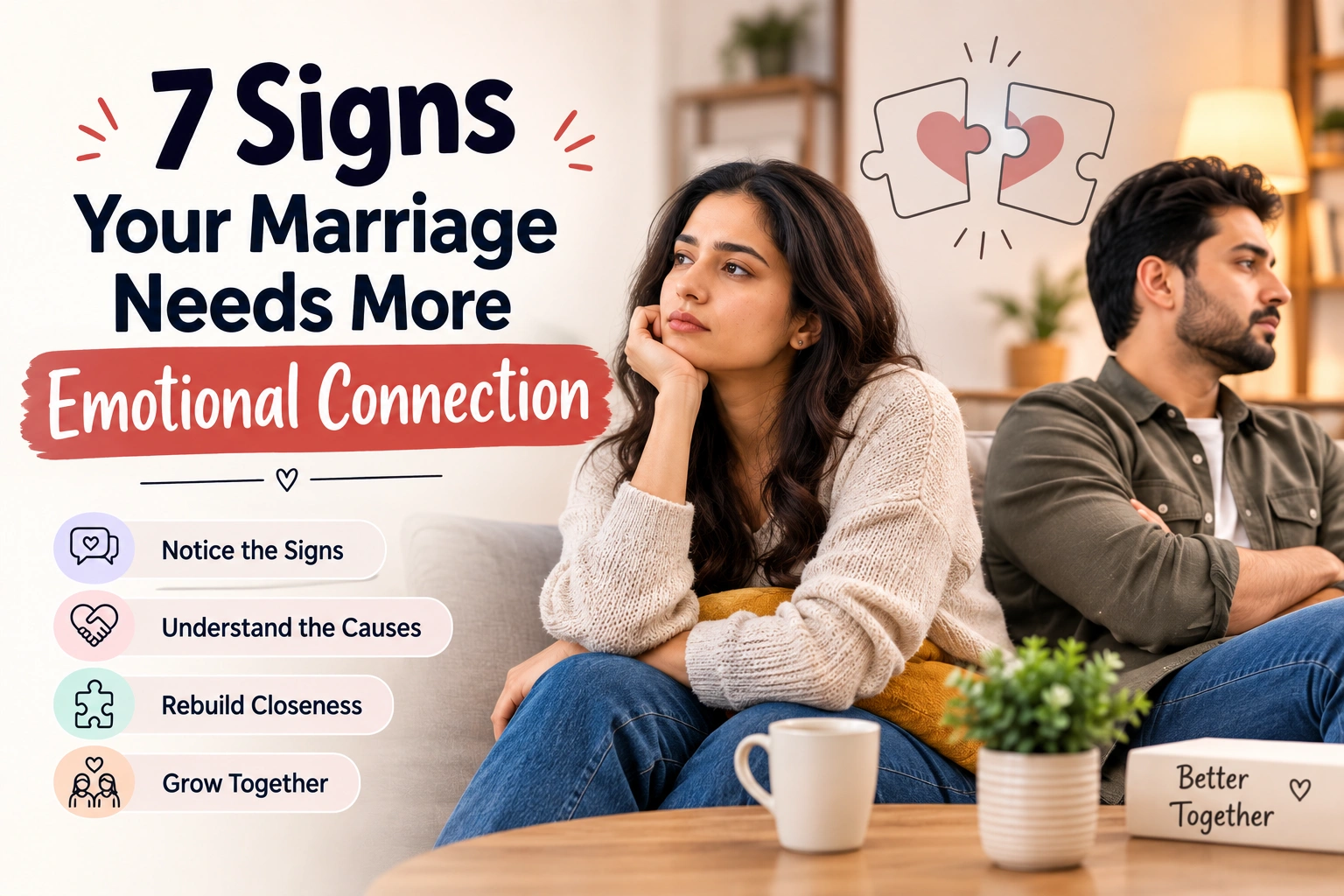
7 Signs Your Marriage Needs More Emotional Connection
1. You Talk, But Mostly About Responsibilities
You probably still communicate. You discuss who’s picking up the children, what’s needed from the grocery store, when the bills are due, or what needs to happen at work.
But when conversations rarely go beyond responsibilities, something important can get lost.
You may stop asking about each other’s thoughts, worries, dreams, interests, or experiences. Marriage can start feeling more like a partnership for managing a household than a relationship between two people who are curious about each other.
2. You Feel Lonely Even When You’re Together
Loneliness isn’t always about being physically alone. Sometimes it’s sitting next to the person you love and still feeling as though you’re emotionally by yourself.
You may spend evenings together, eat at the same table, or sleep in the same room, but feel like you’re living separate emotional lives. You don’t necessarily want more time together. You want the time you already have to feel more meaningful.
That difference between physical togetherness and emotional companionship is worth noticing.
3. You Stop Sharing the Little Things
At one point, you probably told your spouse everything: the funny thing that happened at work, a random thought you had, something that annoyed you, or a small piece of good news.
Over time, those little conversations can disappear.
They may seem unimportant, but they’re actually part of what keeps couples connected between the bigger conversations. Sharing ordinary moments gives partners a window into each other’s daily lives. When you stop sharing them, emotional distance can grow without either person deliberately choosing it.
4. You Avoid Vulnerable or Difficult Conversations
Maybe there’s something you’ve wanted to say for months, but you keep it to yourself because you don’t want another argument. Perhaps you expect your feelings to be dismissed, criticized, misunderstood, or turned into a bigger problem.
When that happens repeatedly, you may start protecting yourself by staying quiet.
The trouble is that emotional closeness requires some vulnerability. If either partner feels unsafe expressing what’s really going on inside, the relationship can gradually become emotionally guarded.
5. Affection and Appreciation Have Become Rare
Not every marriage needs constant romance, but small signs of affection and appreciation matter.
A hug before leaving for work. A genuine “thank you.” A compliment. Checking in during a difficult day. Sitting close on the sofa. These small gestures tell your partner, I still notice you. You still matter to me.
Without them, couples can slowly begin taking each other for granted. It’s not always intentional. Life simply becomes busy, and appreciation becomes something you feel but don’t express.
6. You Feel More Like Roommates Than Partners
You may be very good at running a household together. You divide responsibilities, handle finances, manage schedules, and take care of the practical side of life.
But when was the last time you simply enjoyed being a couple?
If most of your interactions are about getting things done, you may start feeling more like roommates or teammates managing responsibilities than romantic partners sharing a life.
A functioning household isn’t necessarily the same thing as an emotionally connected marriage.
7. You Don’t Turn Toward Each Other During Difficult Times
One of the strongest parts of emotional connection is knowing I can go to my partner when life gets hard.
If you’re struggling, do you naturally want to tell your spouse? When something exciting happens, are they one of the first people you want to share it with?
If you’ve started dealing with everything alone or automatically seeking emotional support elsewhere, it may be a sign that some distance has developed.
This doesn’t mean having friends or family for support is unhealthy. It simply matters whether your spouse still feels like an emotionally safe and meaningful person to turn toward.
Why Does Emotional Connection Fade in Marriage?
Usually, there’s no single reason. Emotional distance can be the result of several small changes happening over time.
Busy schedules can leave couples with very little uninterrupted time together. Parenting and household responsibilities can shift attention toward everyone else’s needs. Work pressure and financial stress can leave both partners mentally exhausted.
Unresolved arguments can also create resentment. When difficult conversations are repeatedly avoided, partners may become less willing to open up. Over time, unresolved tension can make even small disagreements harder to handle.
Poor communication can make the problem worse because each person starts making assumptions about what the other is thinking or feeling.
Major life changes can have an impact too. Moving, becoming parents, changing jobs, dealing with family problems, or going through a difficult period can temporarily change the dynamic between partners.
And sometimes, couples simply stop making an effort because the relationship feels secure. They assume their partner already knows they are loved, so they stop expressing it.
Over time, reduced emotional and physical intimacy can become part of the new normal.
How to Rebuild Emotional Connection With Your Spouse
The answer usually isn’t one dramatic conversation or one perfect date night. Connection tends to return through small things that happen consistently.
1. Start With Small Conversations
You don’t have to begin with, “We need to talk about our marriage.”
Start smaller. Ask about your partner’s day. Tell them something you’ve been thinking about. Share a memory, a funny moment, or something you’re looking forward to. These simple habits can help bring emotional closeness back into your marriage over time.
The goal is to become interested in each other’s inner world again.
2. Listen Without Immediately Trying to Fix Things
When your spouse shares something difficult, your first instinct may be to offer a solution. Sometimes, though, they aren’t asking you to solve anything.
They simply want to feel heard.
Let them finish. Ask questions. Try to understand what they’re experiencing before explaining what you think they should do.
3. Create Regular Time Without Distractions
You don’t necessarily need elaborate date nights. Even 20 to 30 minutes together each day can make a difference when that time is genuinely focused on each other.
Put the phones away. Sit together. Talk. Take a walk. Have tea after the children are asleep.
Consistency matters more than creating a perfect plan once a month.
4. Show Appreciation More Often
Don’t assume your spouse knows you appreciate them.
Tell them.
Instead of a general “you’re great,” be specific. Thank them for something they did. Notice the effort they make. Tell them when you admire something about them.
Small expressions of appreciation can gradually change the emotional atmosphere in a home.
5. Talk About What Has Been Missing
If you’ve noticed distance, don’t turn the conversation into a list of everything your partner is doing wrong.
Try saying, “I’ve been feeling less connected to you lately, and I miss how close we used to feel.”
Speaking from your own experience makes it easier for your partner to listen without immediately feeling attacked.
6. Bring Back Small Acts of Affection
Connection isn’t built only through serious conversations.
A hug, holding hands, sitting close, sending a thoughtful message during the day, or checking in after a difficult meeting can all communicate care.
These moments may seem small, but emotional intimacy is often built from exactly these repeated signals of attention and affection.
7. Give the Process Time
If you’ve been emotionally distant for months or years, don’t expect everything to change after one good conversation.
Trust, comfort, vulnerability, and closeness usually return gradually.
Focus less on fixing the entire relationship immediately and more on creating better moments consistently. A series of small changes can eventually create a very different emotional experience between two people.
When Should Couples Consider Professional Support?
Feeling emotionally distant doesn’t automatically mean your marriage is failing. Sometimes couples simply get stuck in patterns that are difficult to change without outside perspective.
Professional support may be helpful if you repeatedly try to communicate but end up having the same arguments, if one or both partners have stopped opening up, or if emotional distance continues despite genuine attempts to reconnect.
Couples counseling can provide a neutral space where both partners can talk openly, understand the patterns affecting their relationship, and learn healthier ways to work through marital difficulties.
A Relationships professional such as Dr. Neha Mehta can help couples explore these concerns with greater clarity and without turning every difficult conversation into another argument.
Seeking support doesn’t mean you’ve failed at marriage. Sometimes it simply means you’re willing to take the relationships seriously enough to understand what isn’t working.
FAQs
1. How do I know if my marriage lacks emotional connection?
You may notice that conversations have become mostly practical, affection has decreased, or you feel lonely even when you’re together. You may also stop sharing personal thoughts and turn to others instead of your spouse for emotional support.
2. Can you love your spouse but feel emotionally disconnected?
Yes, love and emotional connection aren’t always experienced at the same level throughout a marriage. You can deeply care about your spouse while still feeling distant because of stress, unresolved issues, or a lack of quality time.
3. Why do married couples become emotionally distant?
Busy schedules, parenting, stress, unresolved resentment, poor communication, major life changes, and taking each other for granted can all contribute. Often, emotional distance develops through several small patterns rather than one major event.
4. How can I reconnect emotionally with my husband or wife?
Start with small, consistent efforts. Talk about everyday experiences, listen without judgment, spend distraction-free time together, express appreciation, and create opportunities for affection and honest conversation.
5. Can emotional disconnection affect physical intimacy?
It can. Emotional and physical intimacy can influence each other, and feeling distant may reduce affection, comfort, or desire. However, changes in physical intimacy can have many causes and don’t always indicate a relationship problem.
6. How long does it take to rebuild emotional connection in marriage?
There isn’t a fixed timeline. It depends on how long the distance has existed, what caused it, and how consistently both partners work toward reconnecting. Small improvements can happen quickly, but deeper emotional closeness may take longer.
7. When should couples seek professional help?
Consider professional support when communication repeatedly breaks down, the same conflicts keep returning, or you feel unable to reconnect despite trying. Getting help earlier can sometimes make it easier to address problems before they become deeply entrenched.